PolPartDesign
Tools for the development and design of plastic moulded parts
Snap joints · gears · tanks
PolPartDesign currently contains the components snap joints, gear calculation and calculation of cylindrical plastic tanks. The software is being extended step by step with further calculations (e.g. press-fit joints).
The secant/tangent modulus calculation and the thermal conductivity calculation can also be used independently of a project.
In snap joints, spring elements engage positively in corresponding recesses by means of cams, hooks or beads. The parts to be joined are deformed rapidly at the spring elements; after snapping in, the deformation is largely recovered. Releasing – where possible or required – works in the same way.
The module calculates snap joints for different joint types, joint principles and spring elements.
Main features and functions
- Strength and stability verification
- Calculation of joining, release and deflection forces
- 12 different joint types, joint principles and spring elements
- Entry of the required geometry data of the spring elements and joint types
- Variation by selecting different catch elements (trapezoidal, bead, triangular catch …) and cross-section geometries
- Approximate determination of the modulus of elasticity, E0 modulus (via Shore hardness), coefficient of friction and permissible strain
- Project management in individual files, print / print preview
Further information on the calculation and design guidelines in chapter 11 of the book "Development and Design of Plastic Parts".
Try it now
Register in the customer portal to use the software as a trial version, or find out about prices and licenses.
System requirements
- Runs on Windows 10 and later
- Administrator rights for installation and updates
- Usable without internet – a connection is only needed for activation as full version and update notifications
User manual PDF · 3.0 MB
Currently 12 joint types and spring elements are supported.
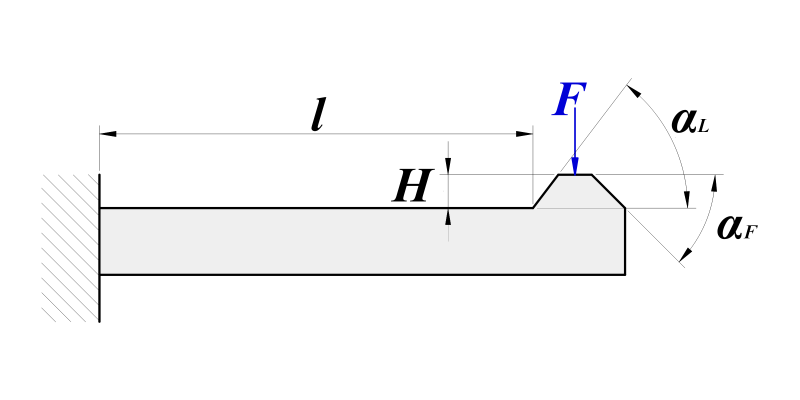
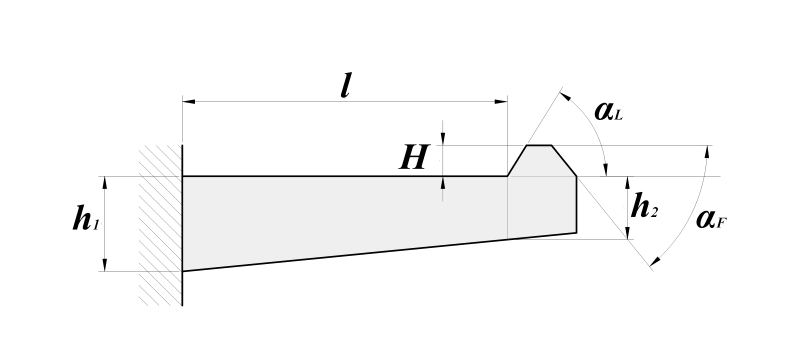
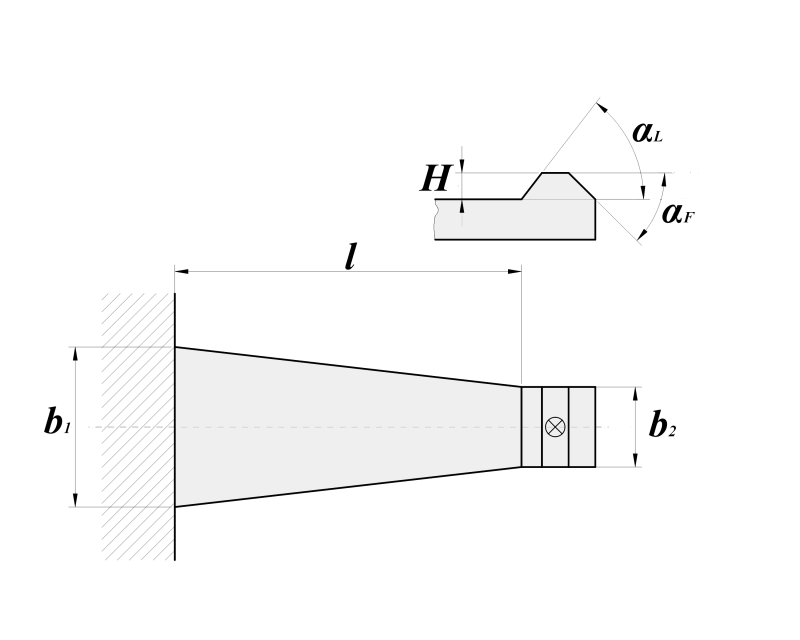
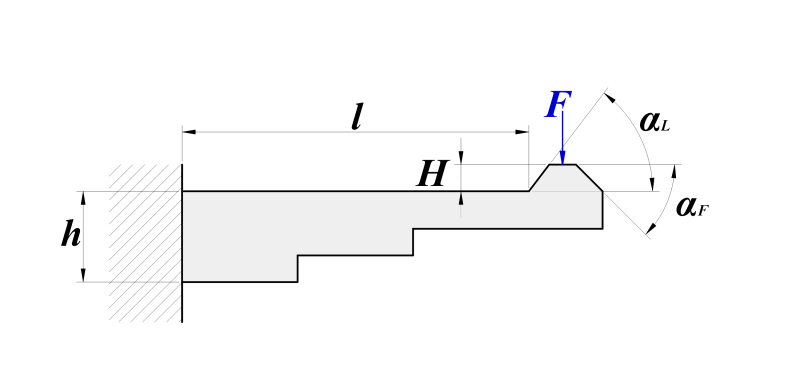
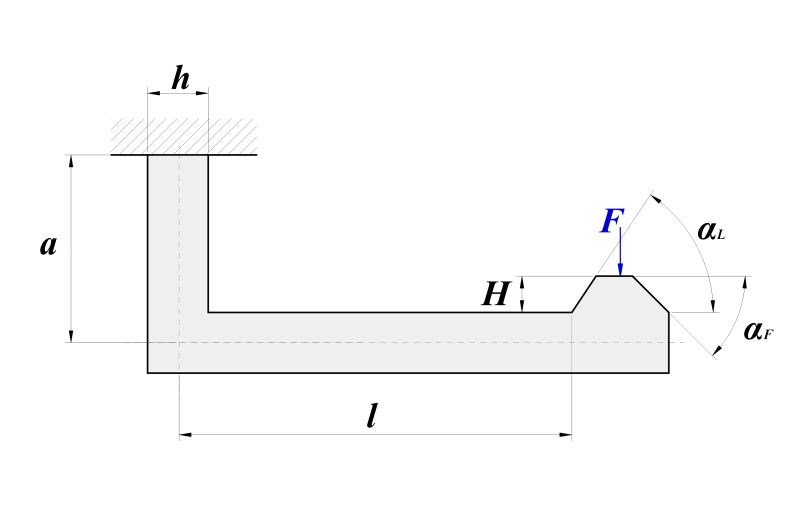
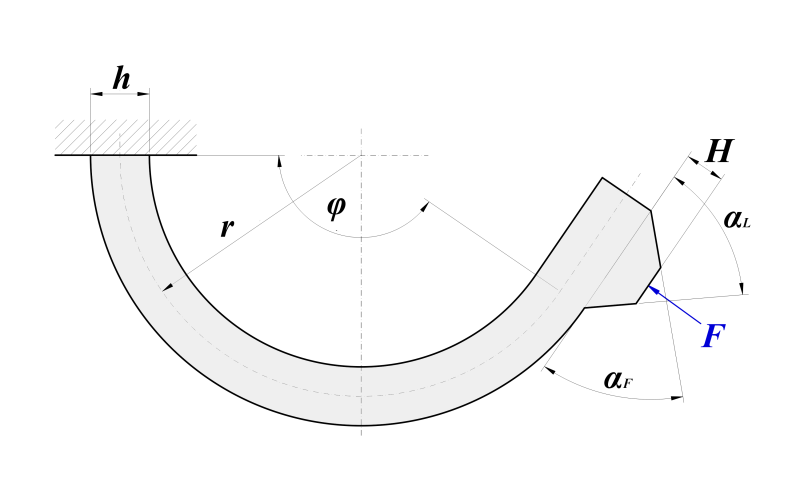
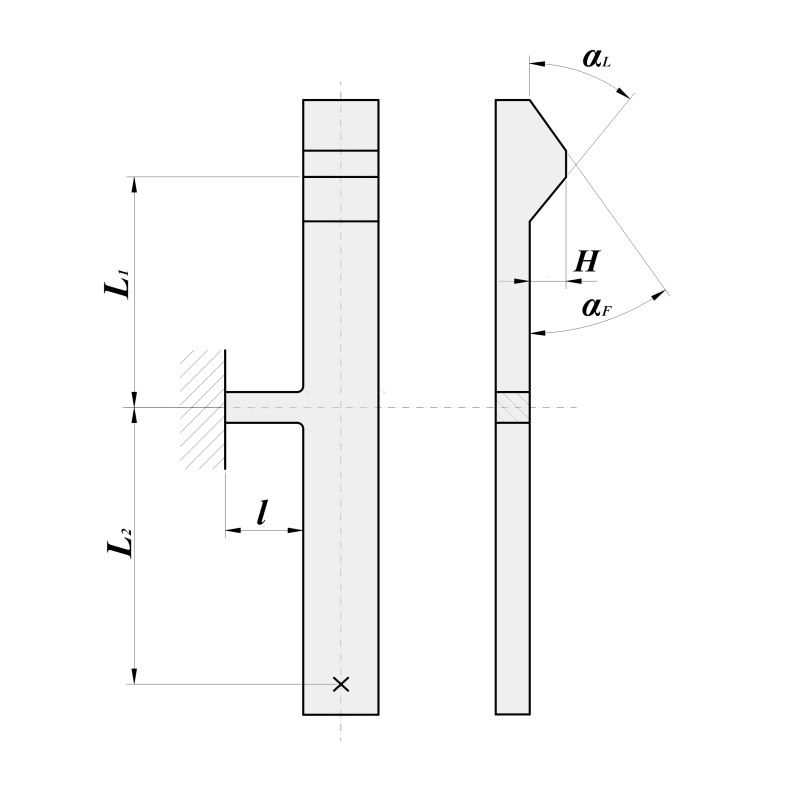
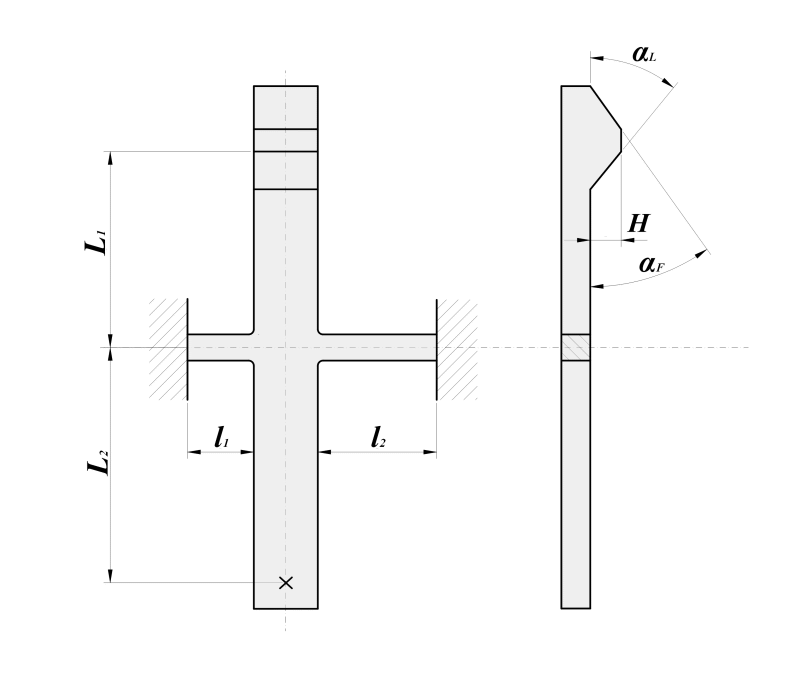
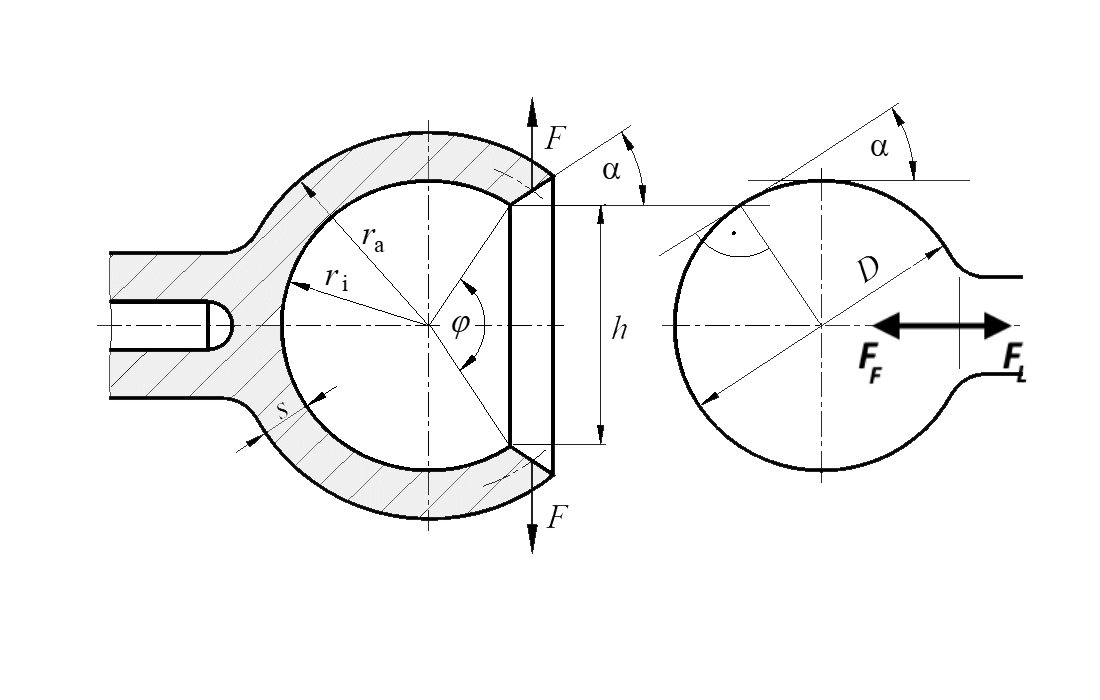
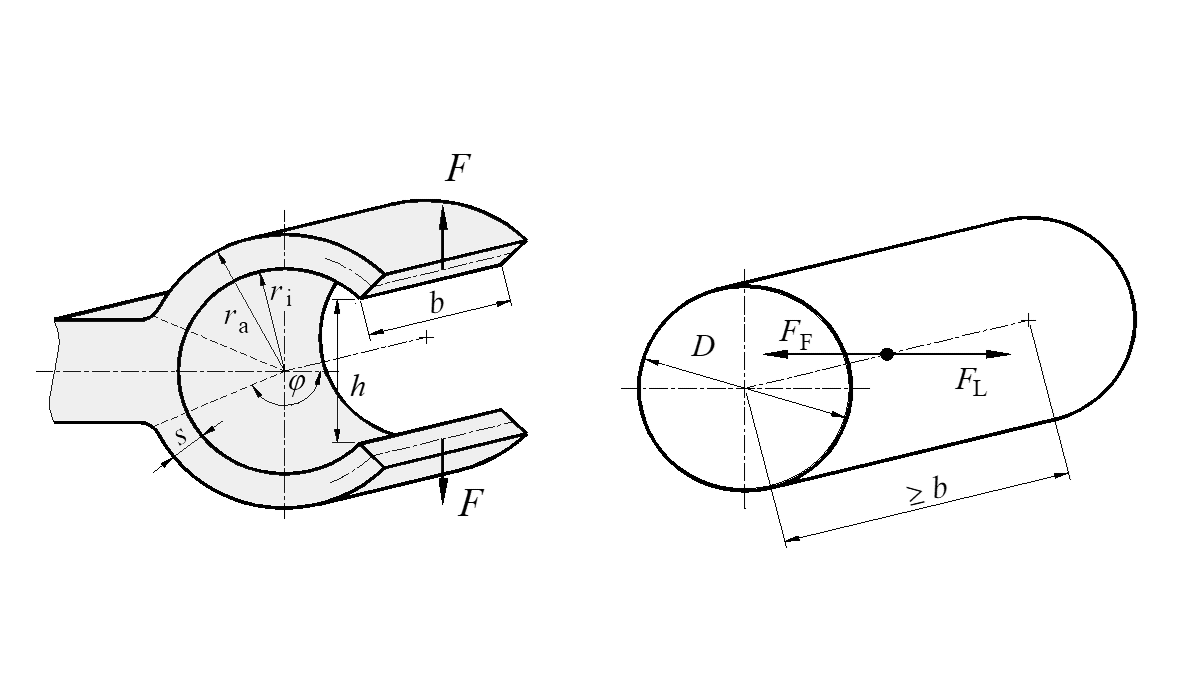
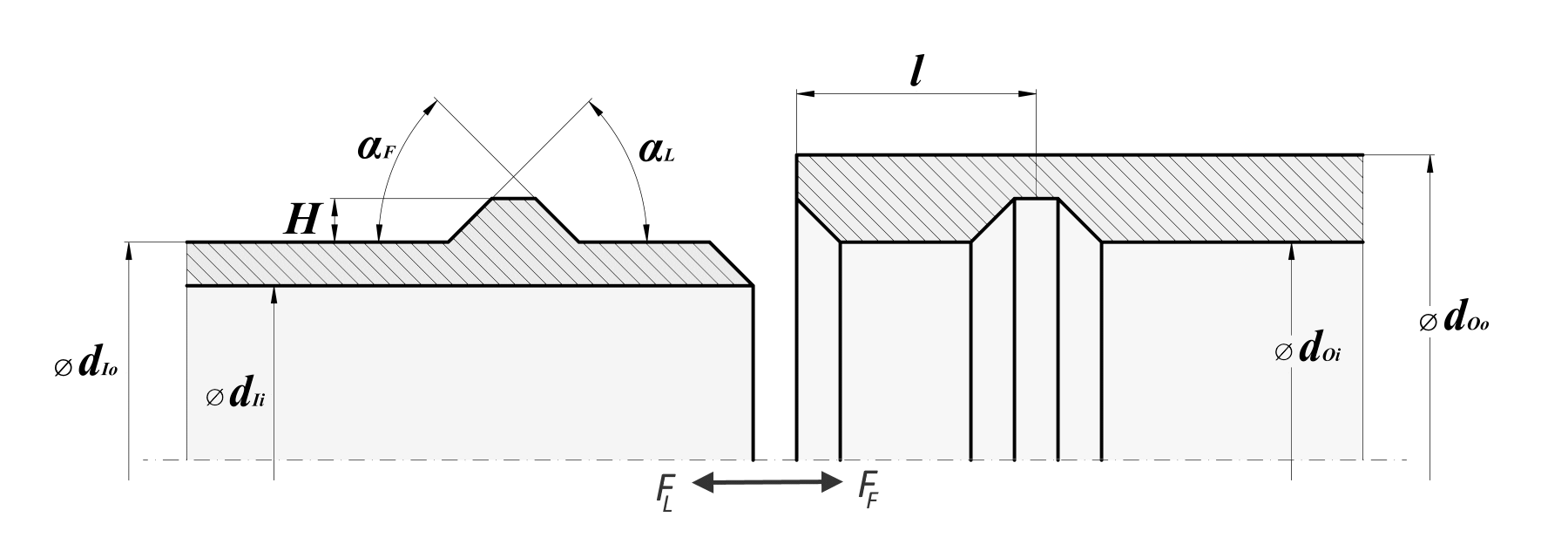
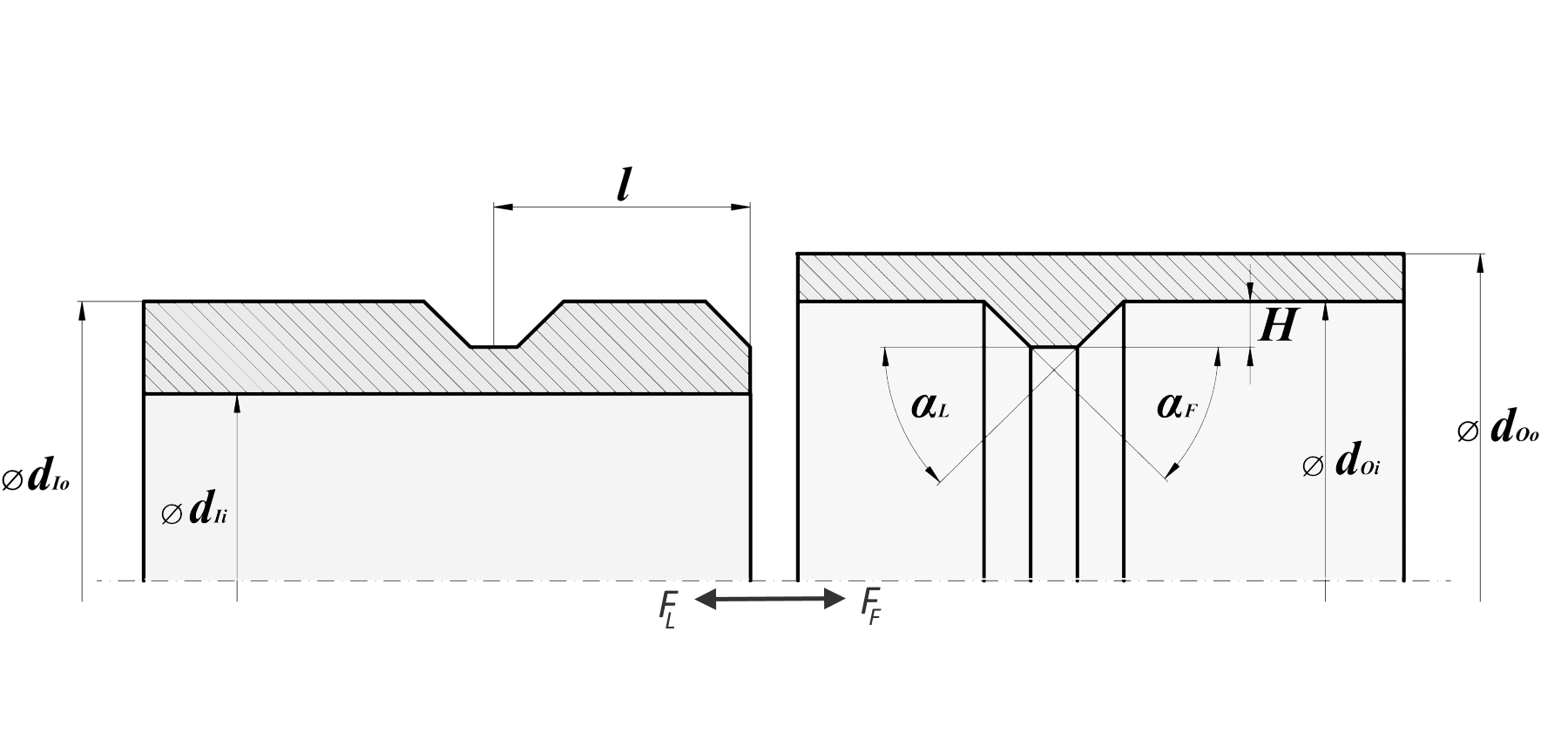
5 catch elements are available.
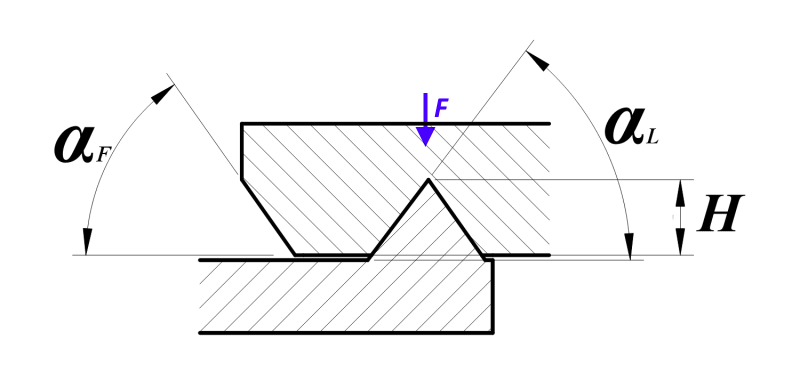
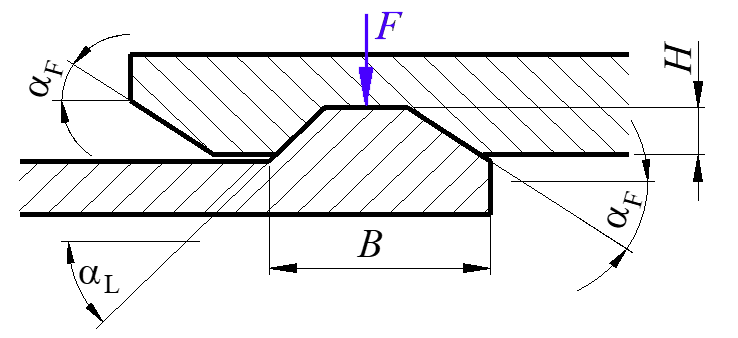
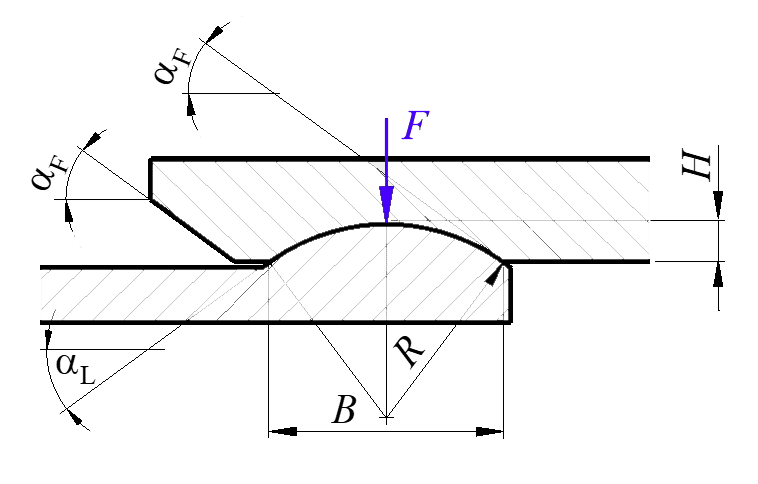
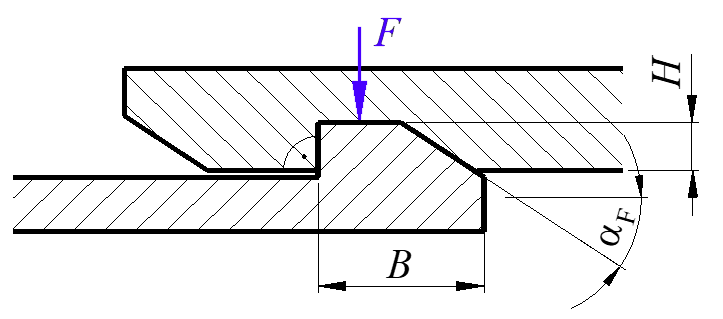
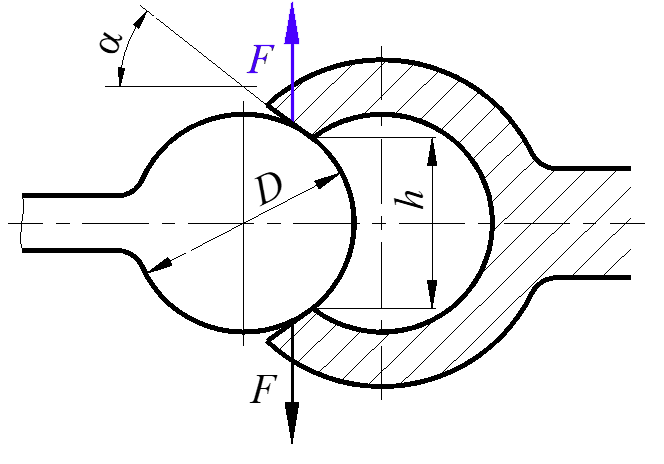
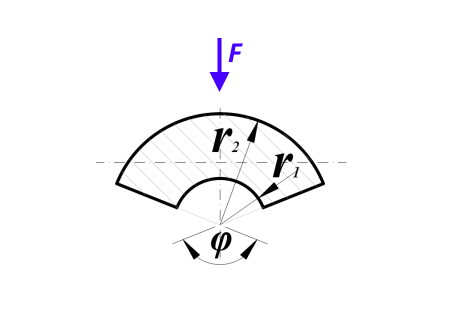
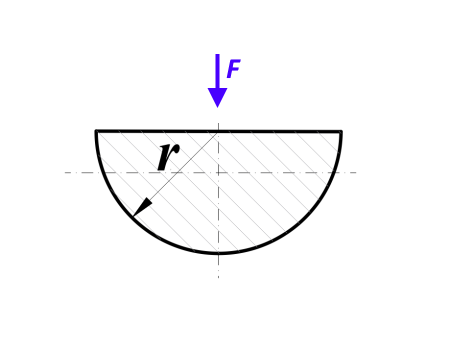
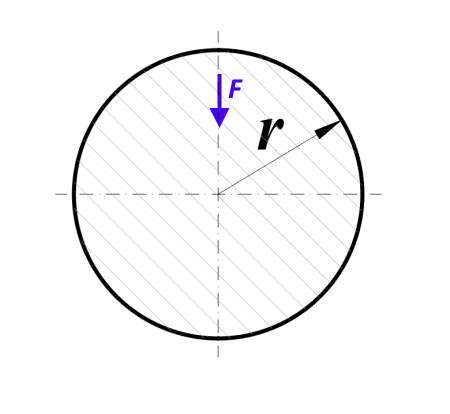
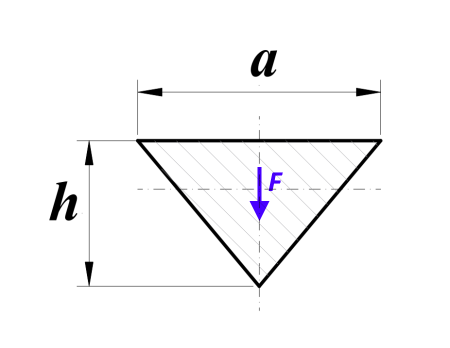
8 cross-section geometries of the spring elements are available.
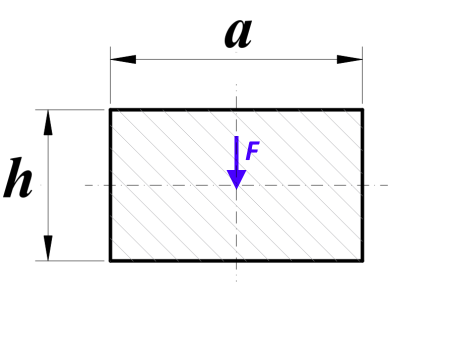
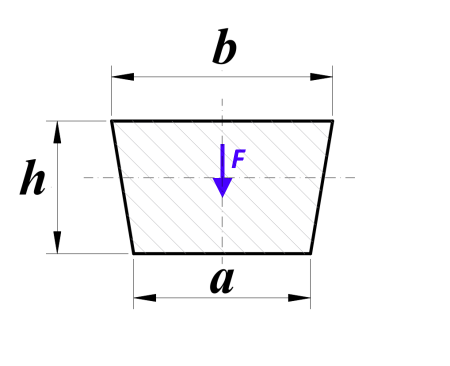
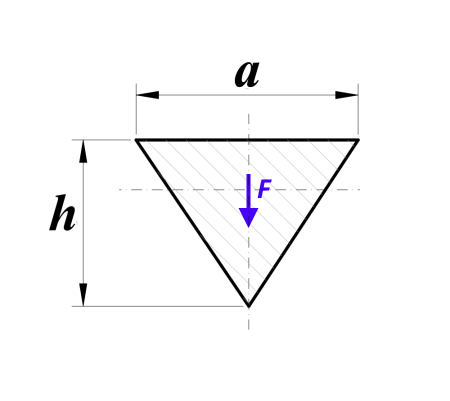
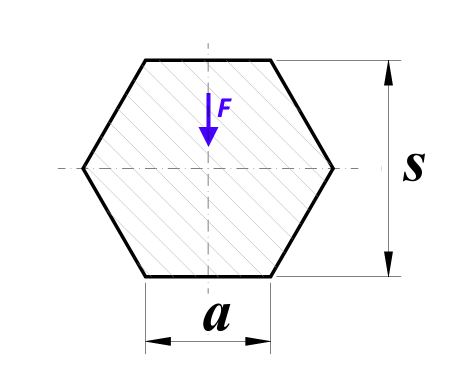
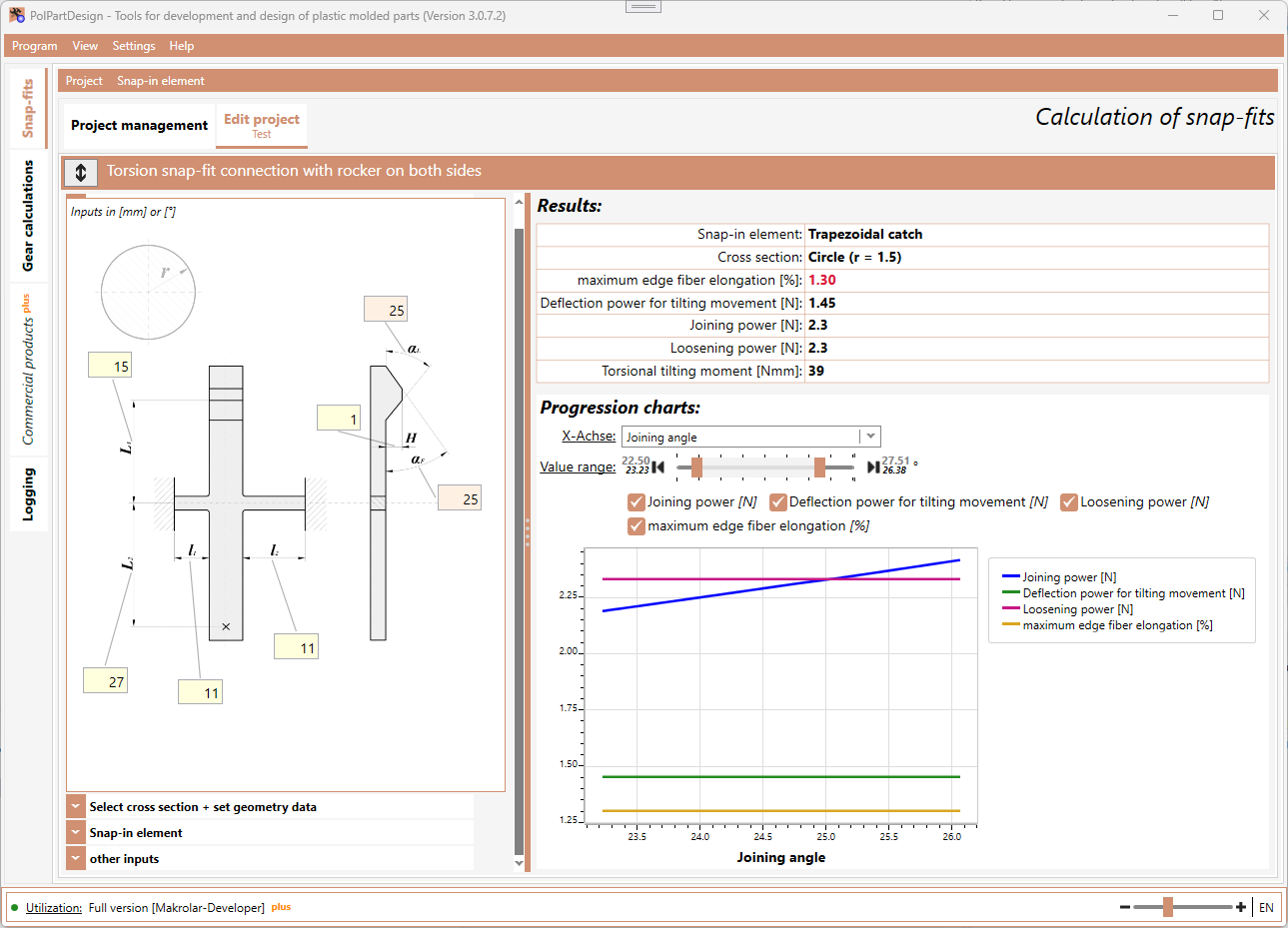
1 / 8 · Snap joints (1/8)
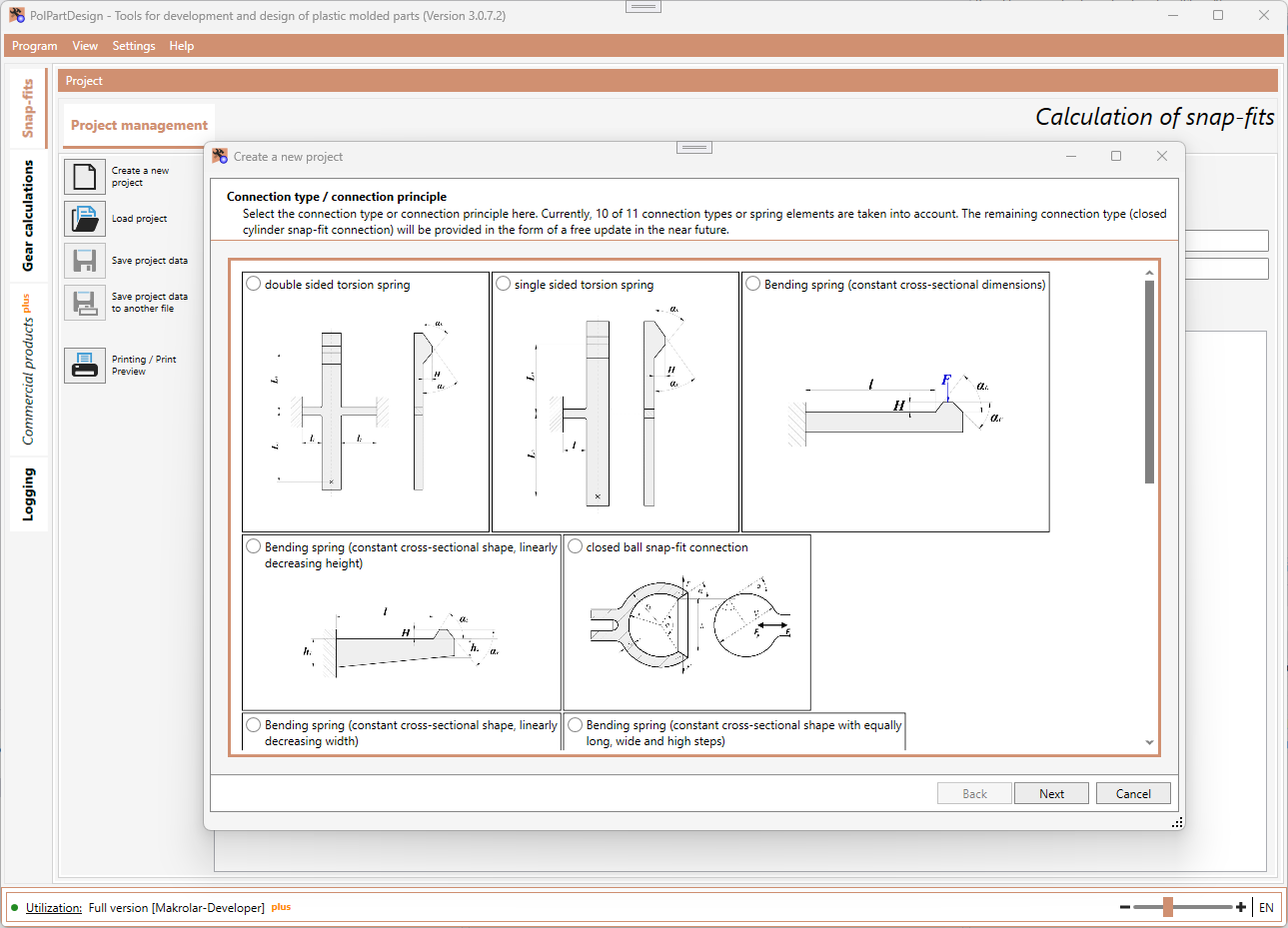
2 / 8 · Snap joints (2/8)
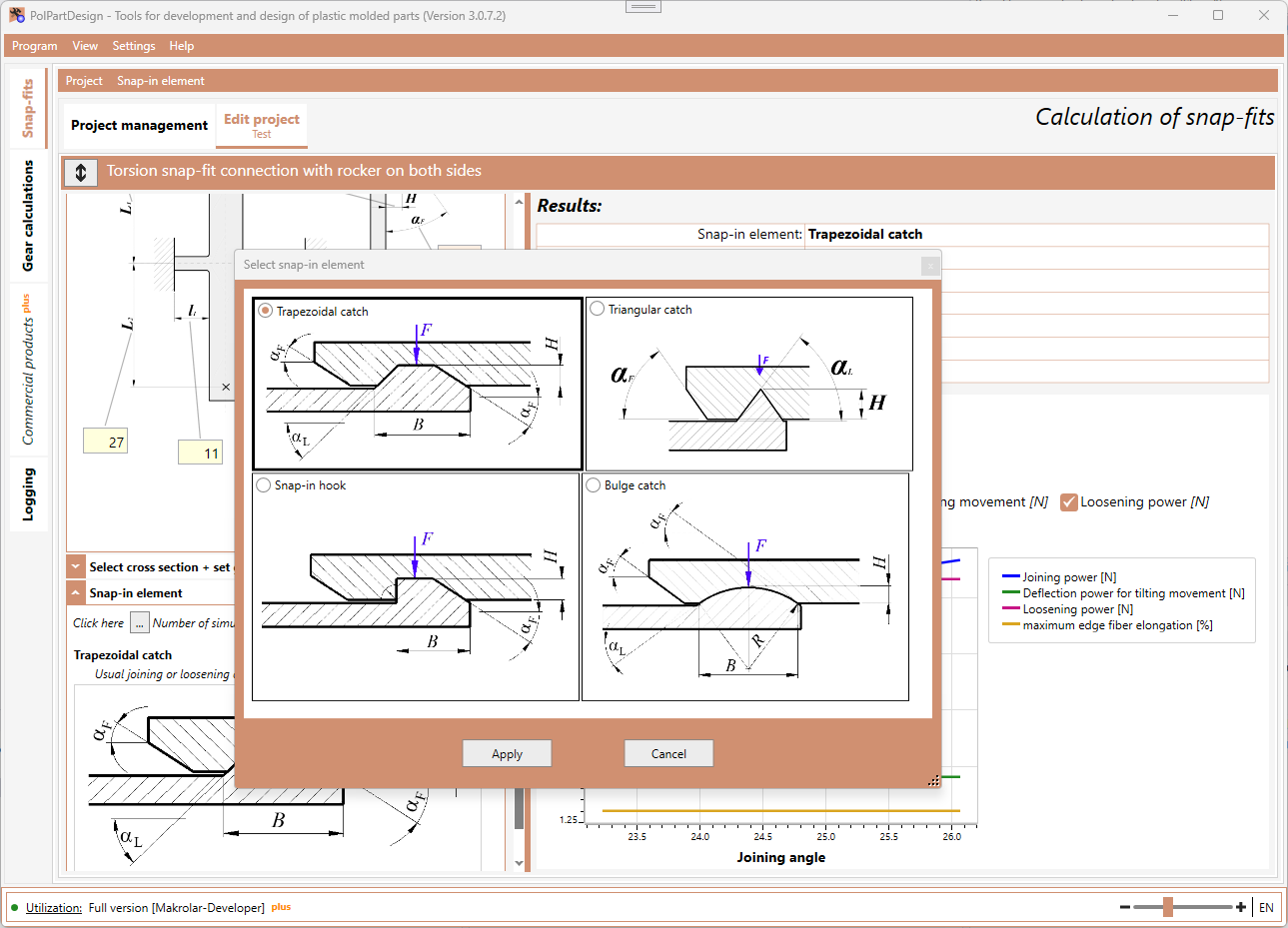
3 / 8 · Snap joints (3/8)
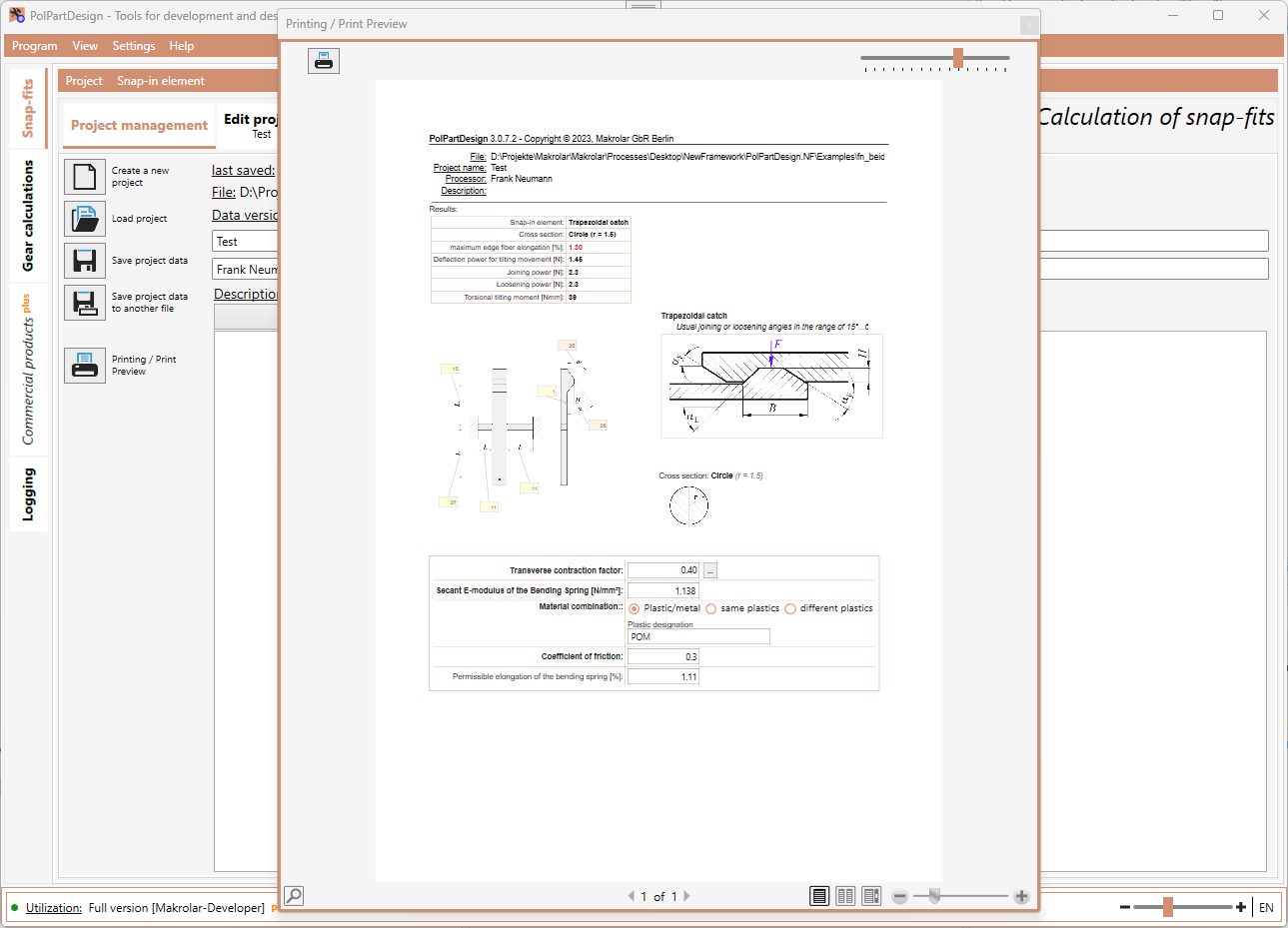
4 / 8 · Snap joints (4/8)
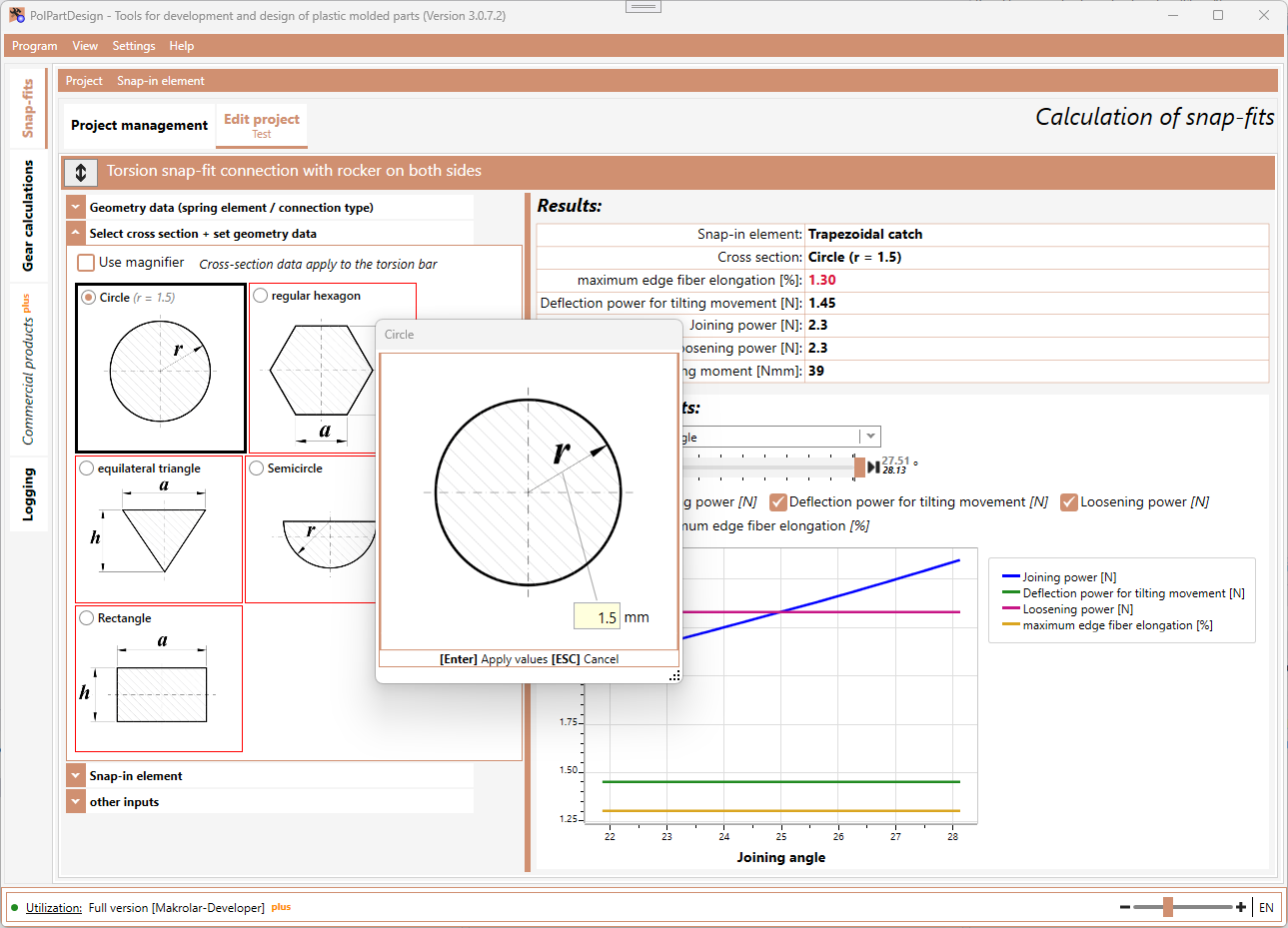
5 / 8 · Snap joints (5/8)
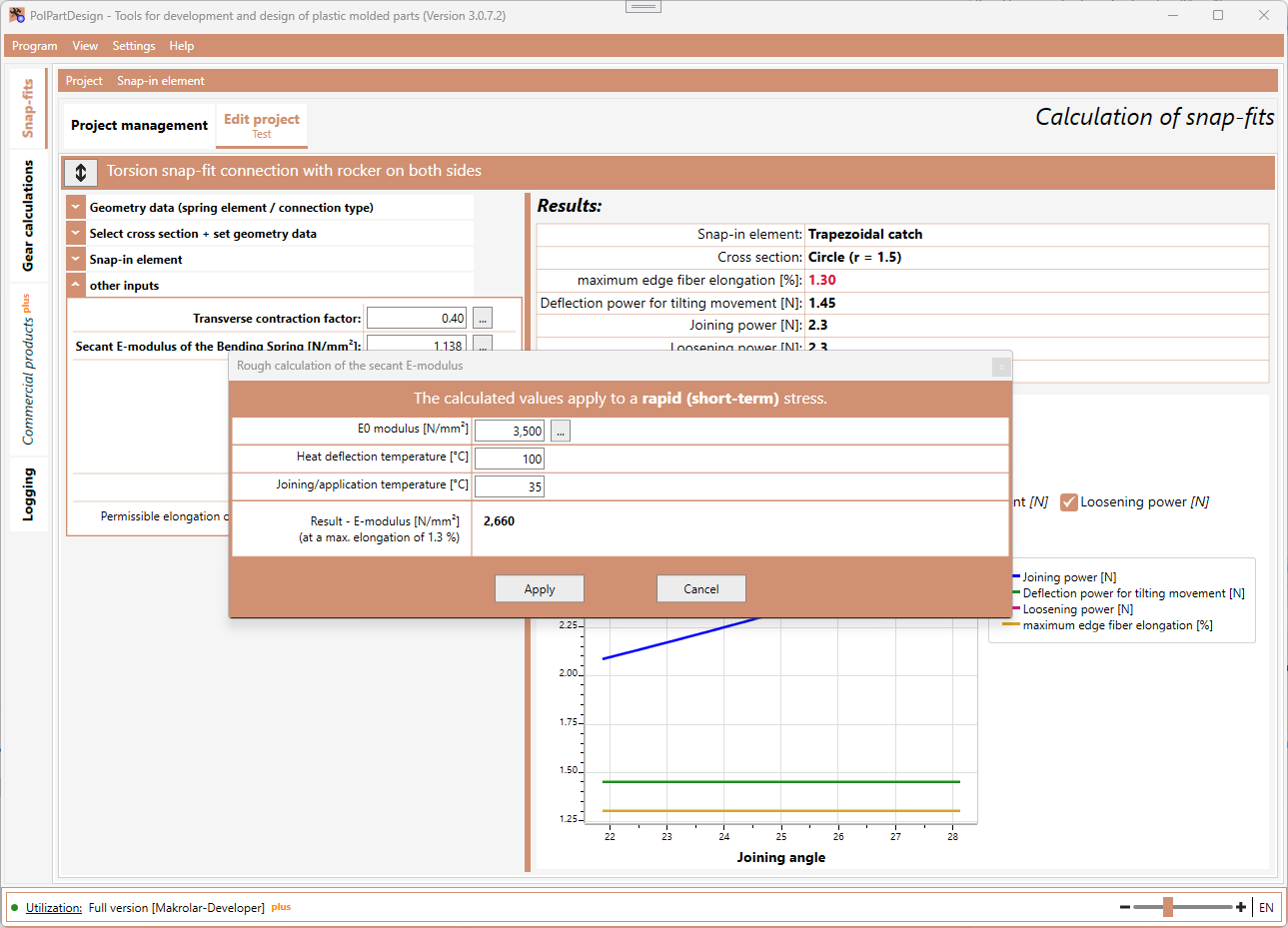
6 / 8 · Snap joints (6/8)
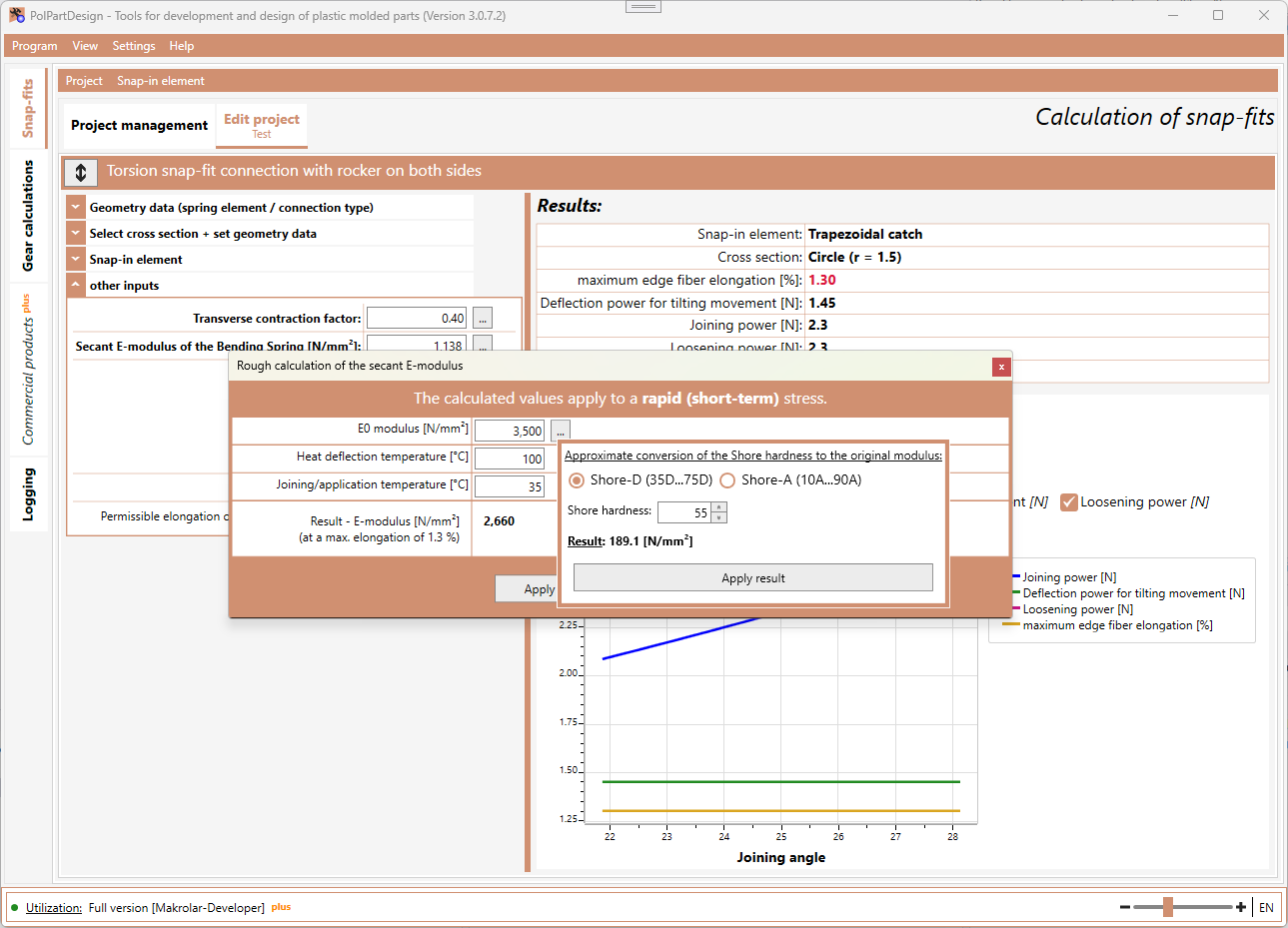
7 / 8 · Snap joints (7/8)
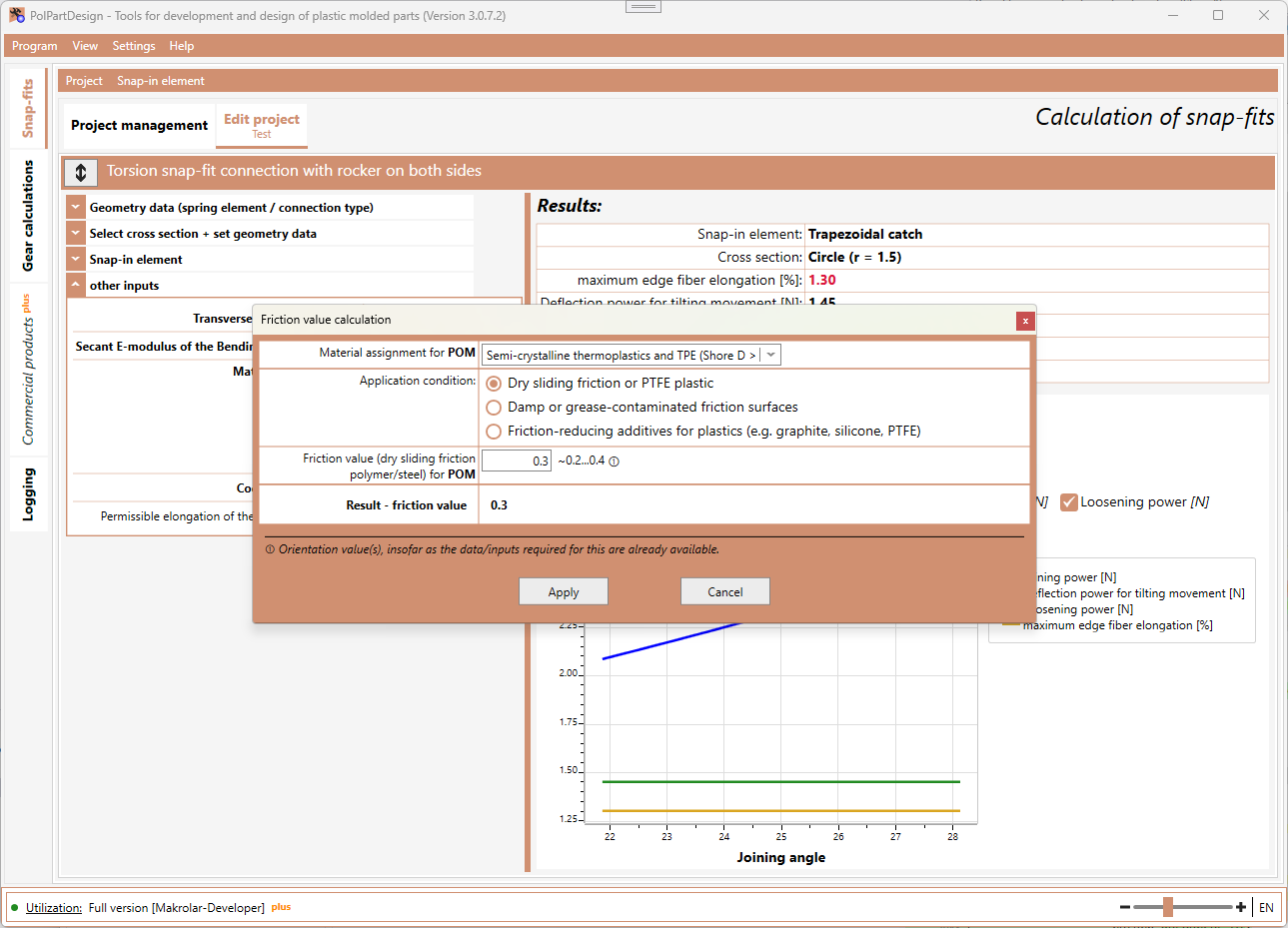
8 / 8 · Snap joints (8/8)
Because of the different deformation behaviour of plastics (viscoelasticity), transferring the calculation models for metal gears to plastic gears is very questionable, but still state of the art. The permissible tooth root strength and tooth flank pressure in particular are critical values. Elaborate gear tests for a very limited number of plastics give the impression of practical calculation data – in fact, these values are considerably incomplete and scattered, and functional relationships between key influencing factors (e.g. tooth temperatures, load cycles, type of lubrication) are only partially documented.
The module calculates plastic spur gears based on DIN 3990: zero gears with 20° involute teeth, spur and helical, and plastics with a modulus of elasticity (initial modulus) according to DIN EN ISO 527 of E0 > 300 N/mm² or a Shore hardness according to DIN EN ISO 7619 > 60D. Gears with profile shift can be calculated by modifying the relevant calculation variables and influencing factors according to DIN 3990.
Main features and functions
- Tooth bulk temperature from a physically based heat balance (friction and mechanical damping losses) with a refined heat transfer model – the influence of the material on the tooth temperature is captured better
- Tooth flank temperature with a modified integral temperature method according to DIN 3990
- Additional dynamic forces via the application factors according to DIN 3990 (part 1)
- All semi-rigid and rigid plastics without elaborate gear tests
- Load capacity verification for tooth root strength, tooth flank pressure, tooth deformation as well as tooth bulk and flank temperature, including safety factors
- Strength verification and temperature checks for metal gears in combined gear trains are not required
- Supplied local database with plastics and metals; manage and use your own plastics data
- Effects of every change to inputs and decisions visible immediately; your own experience values (e.g. coefficient of friction of the material pair, operating mode of the gear) can be used
- Project management in individual files, print / print preview, context-specific program help
The software lets you manage any number of your own plastics and select them for calculation. It also contains a local database with common materials for plastic gear trains and gears:
Plastics 29
Metals 10
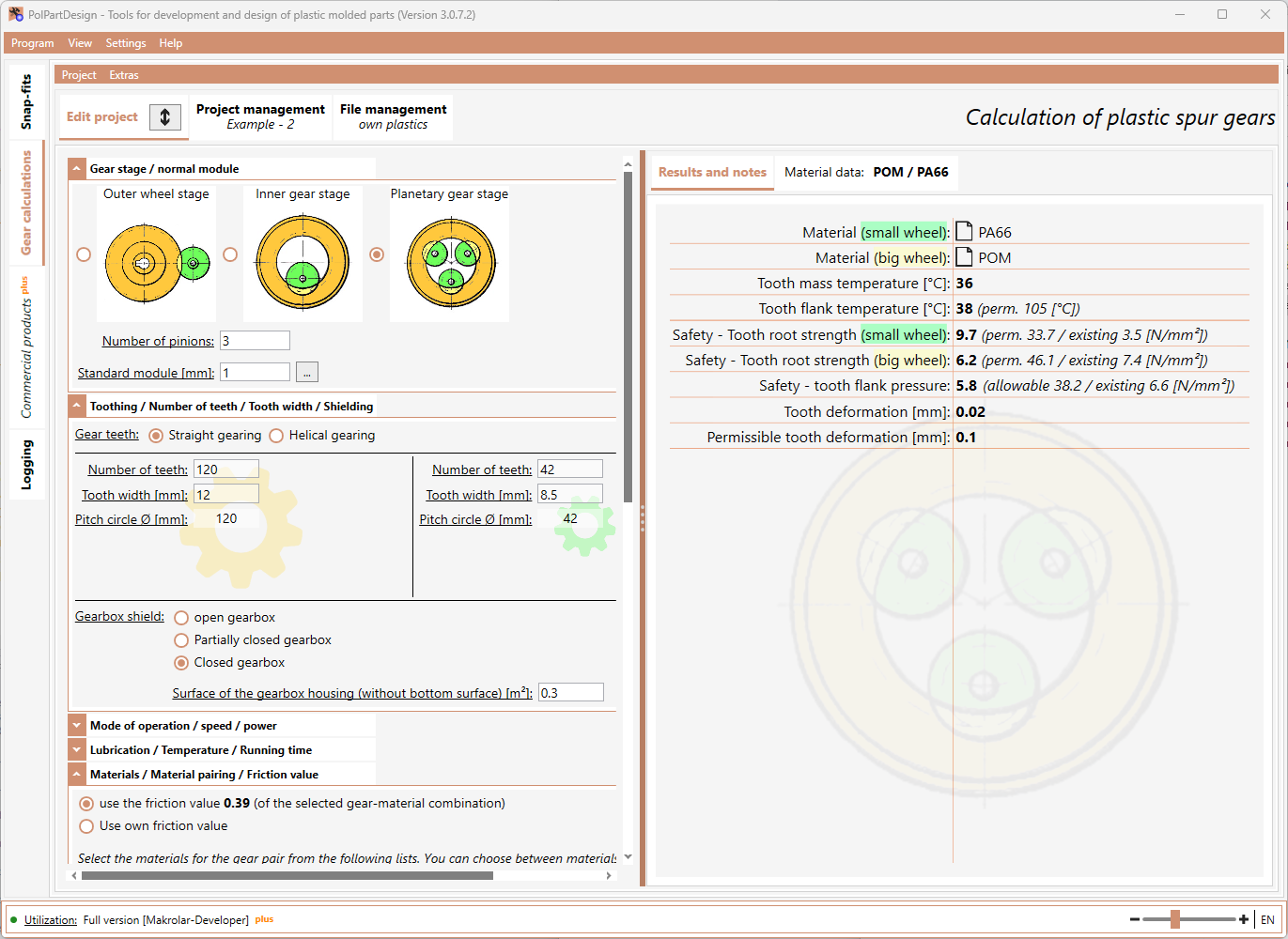
1 / 5 · Gear calculation (1/5)
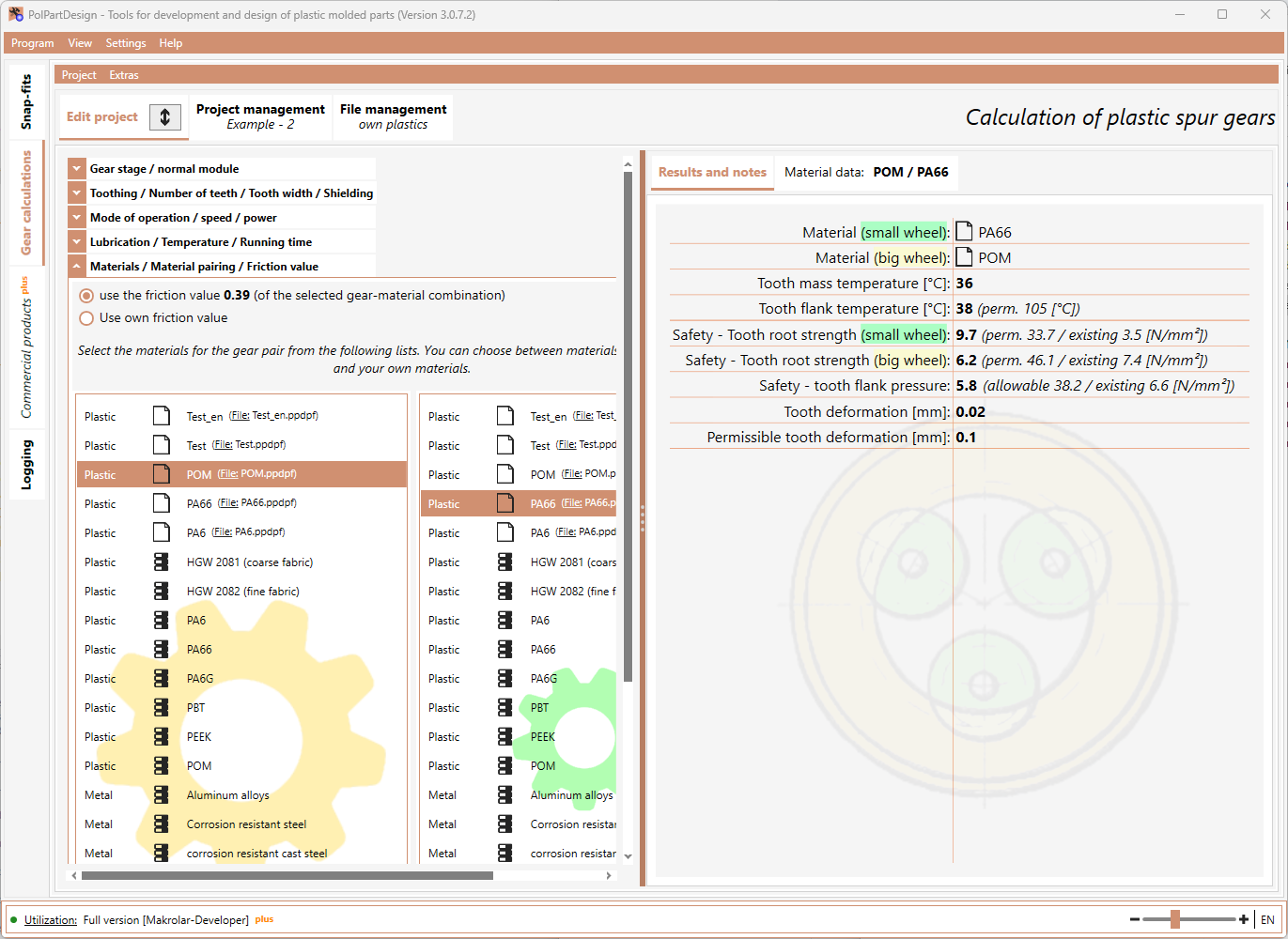
2 / 5 · Gear calculation (2/5)
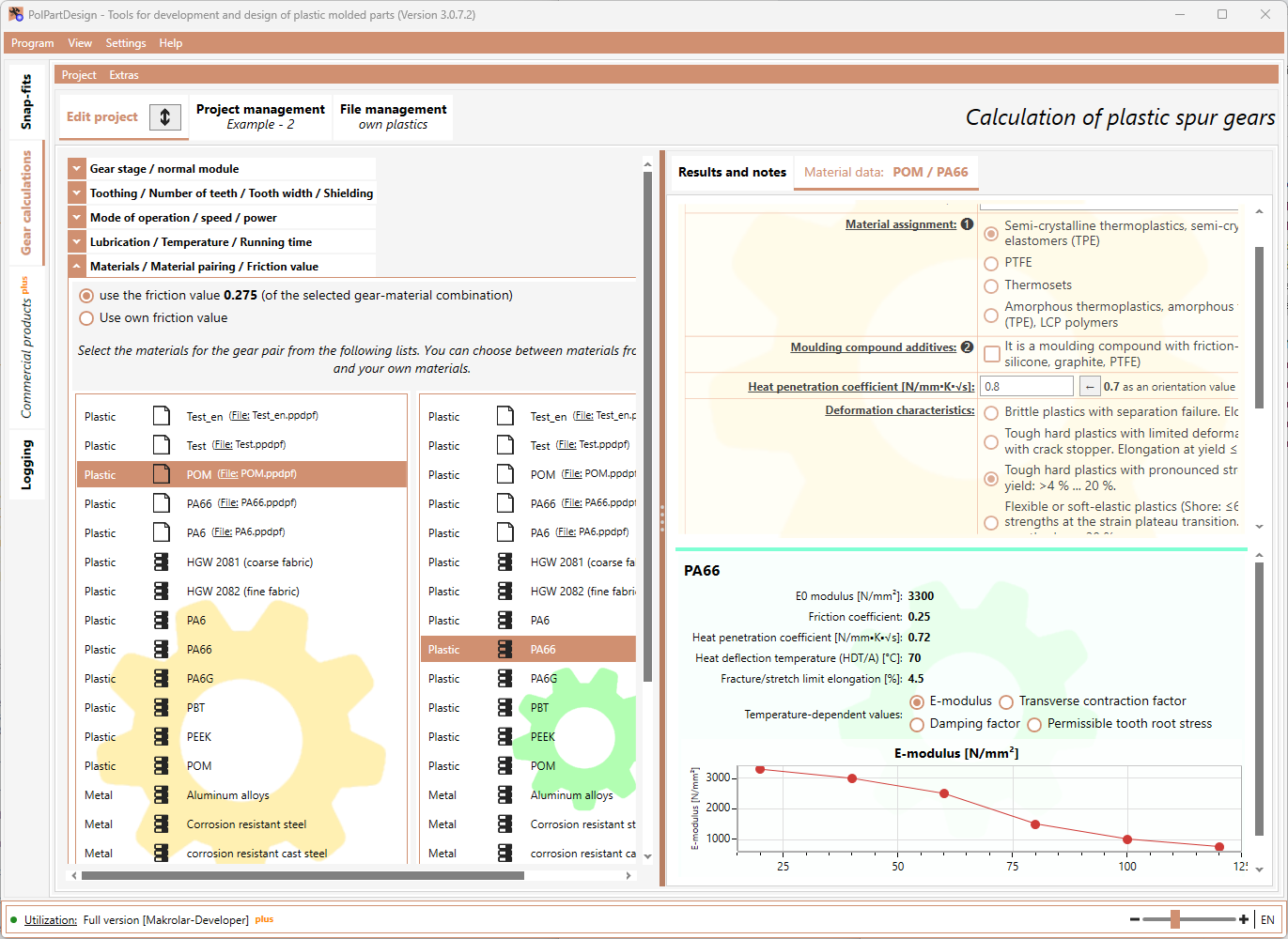
3 / 5 · Gear calculation (3/5)
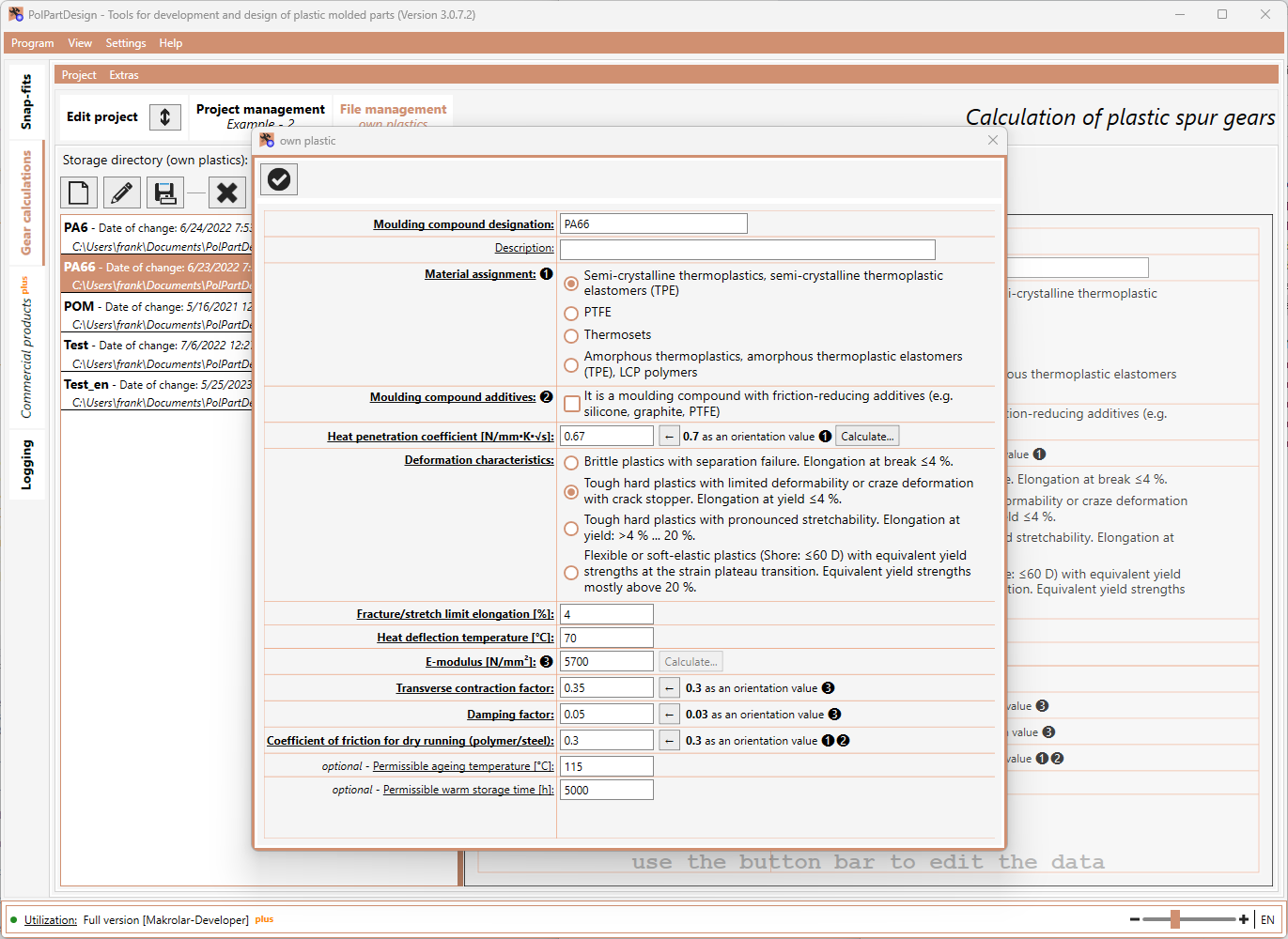
4 / 5 · Gear calculation (4/5)
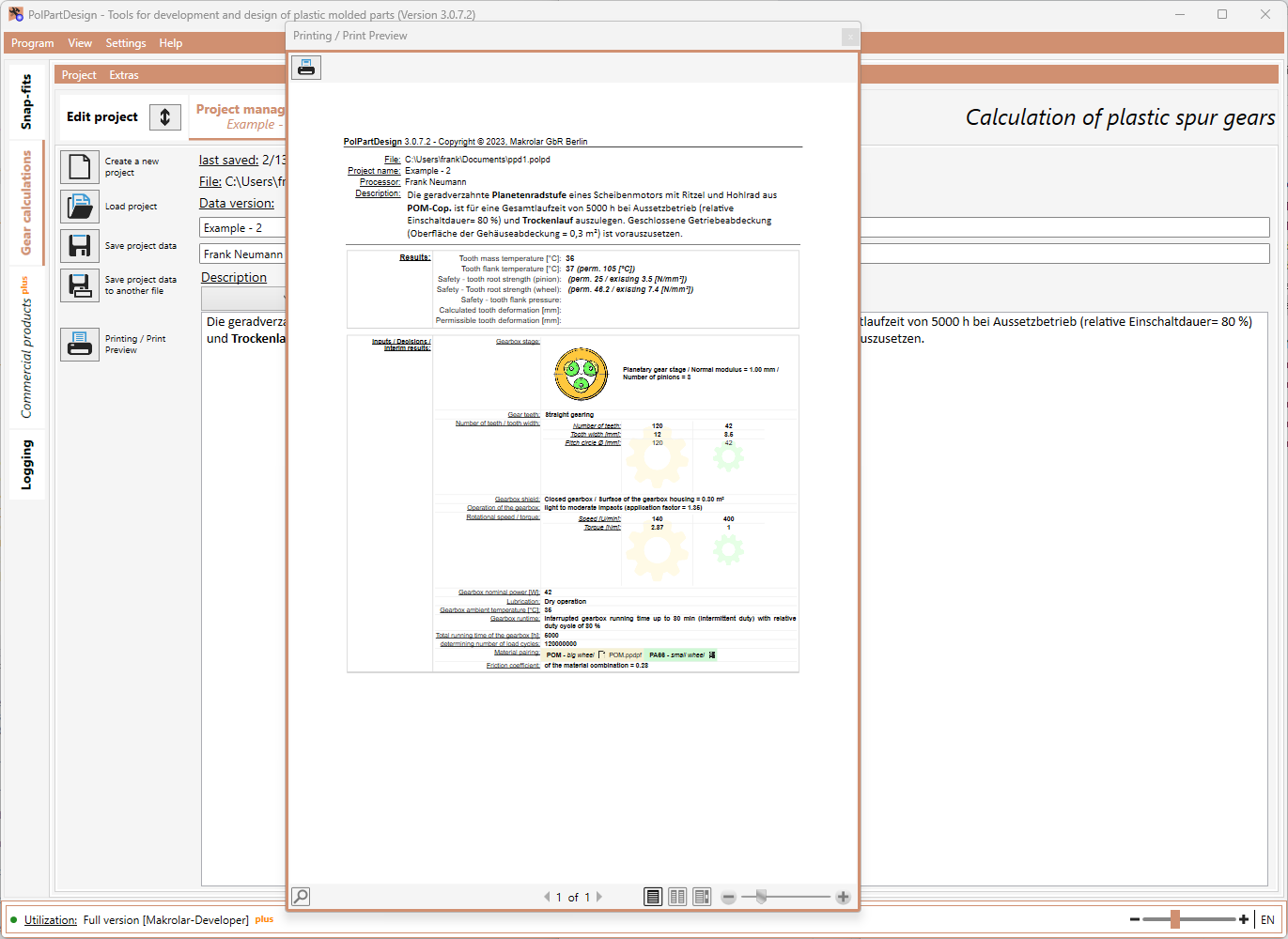
5 / 5 · Gear calculation (5/5)
Calculations of the load on cylindrical liquid tanks made of plastic.
Main features and functions
- Constant static load by specifying the filling height, liquid temperature can be varied
- Interrupted (intermittent) load by identical or different load cycles – each with time, constant liquid temperature and minimum and maximum filling height; the overall load scheme can contain several load cycles
- Calculation of the minimum wall thickness and geometric details of the areas of maximum load
- Strength verification for isotropic and orthotropic plastics
- Approximate determination of the modulus of elasticity, E0 modulus (via Shore hardness) and permissible strain; guide values for critical strains
- Project management in individual files, print / print preview
Further information on the calculation in the book "Development and Design of Plastic Parts".
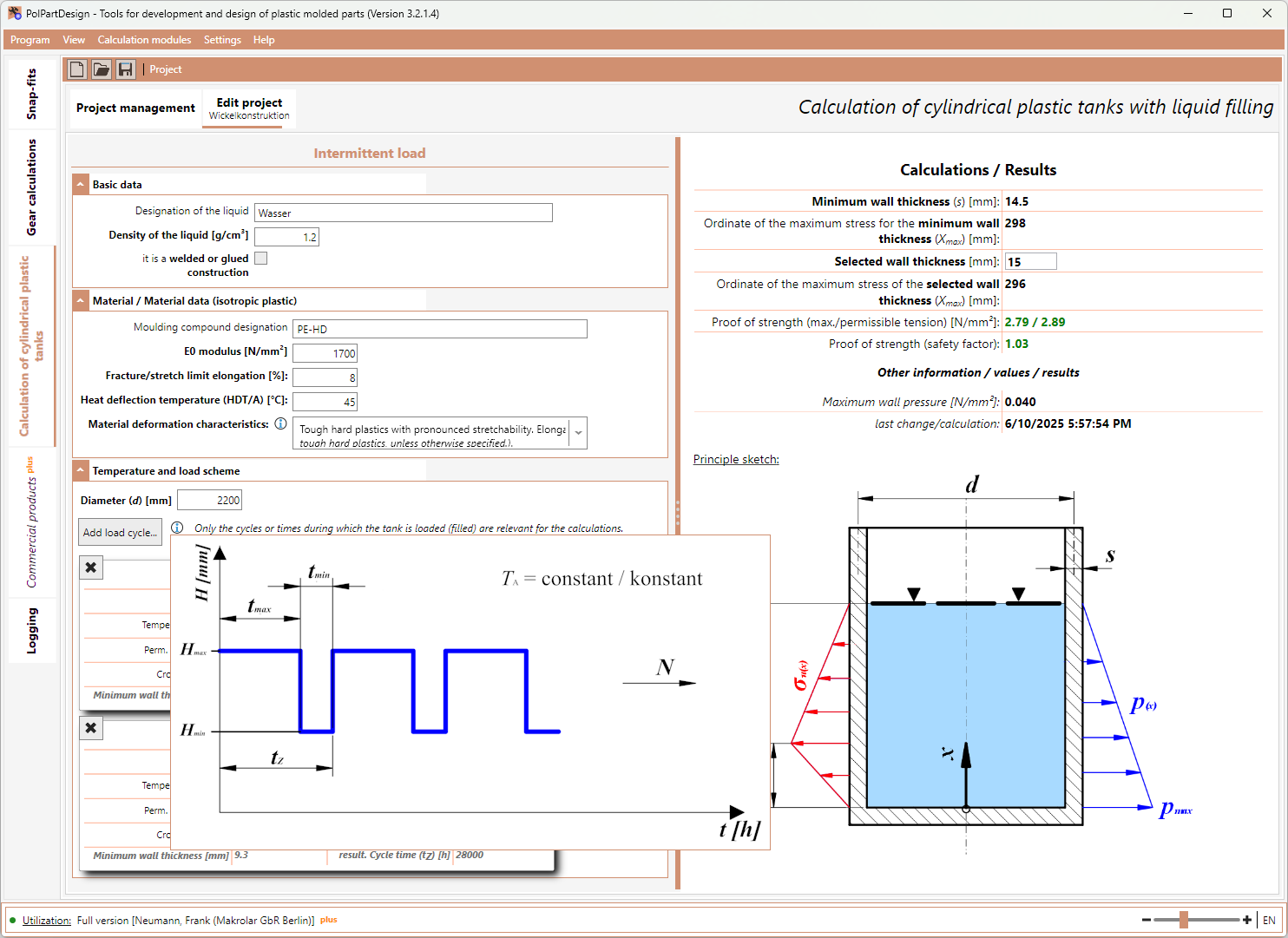
1 / 3 · Intermittent load
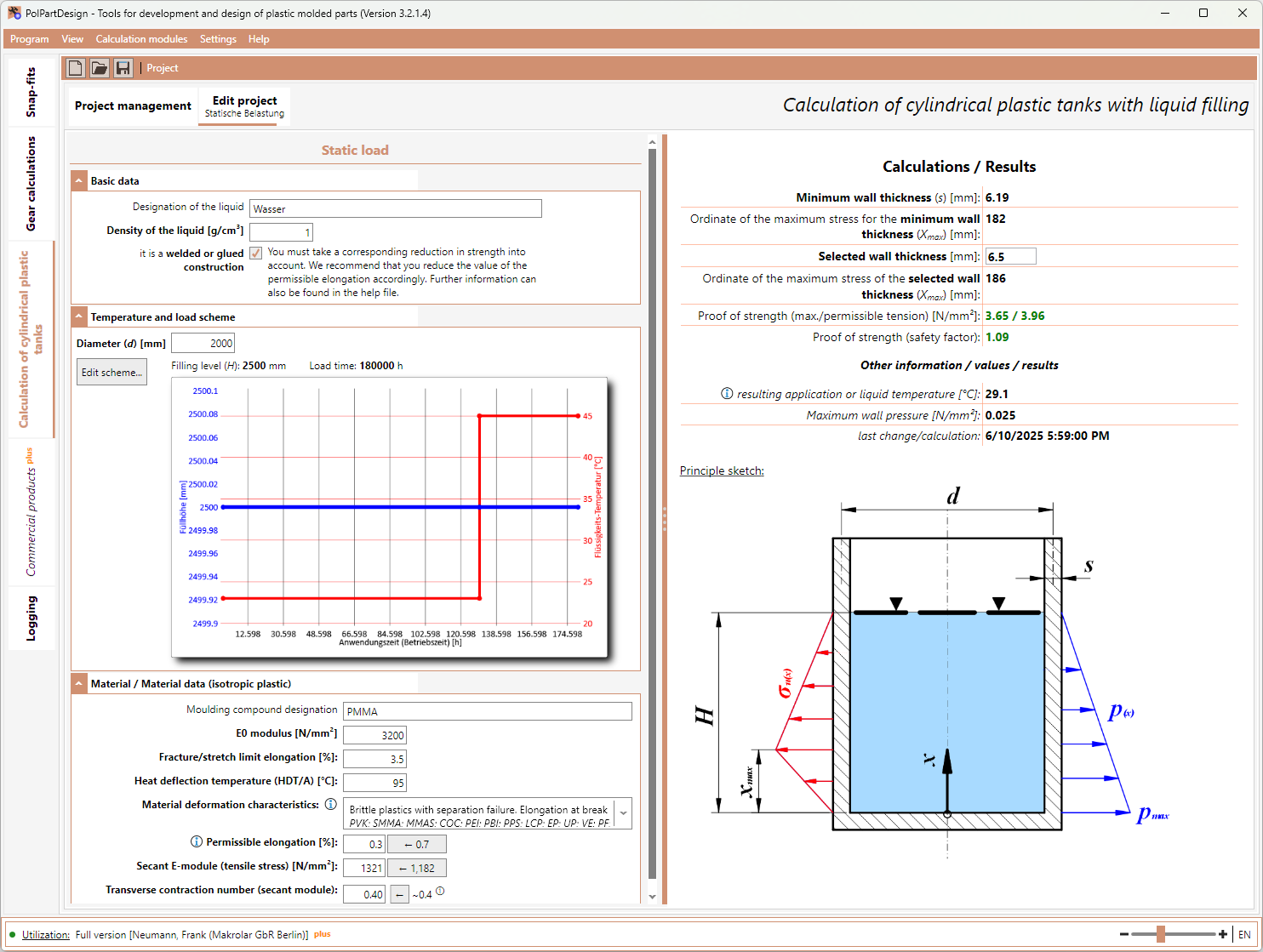
2 / 3 · Static load
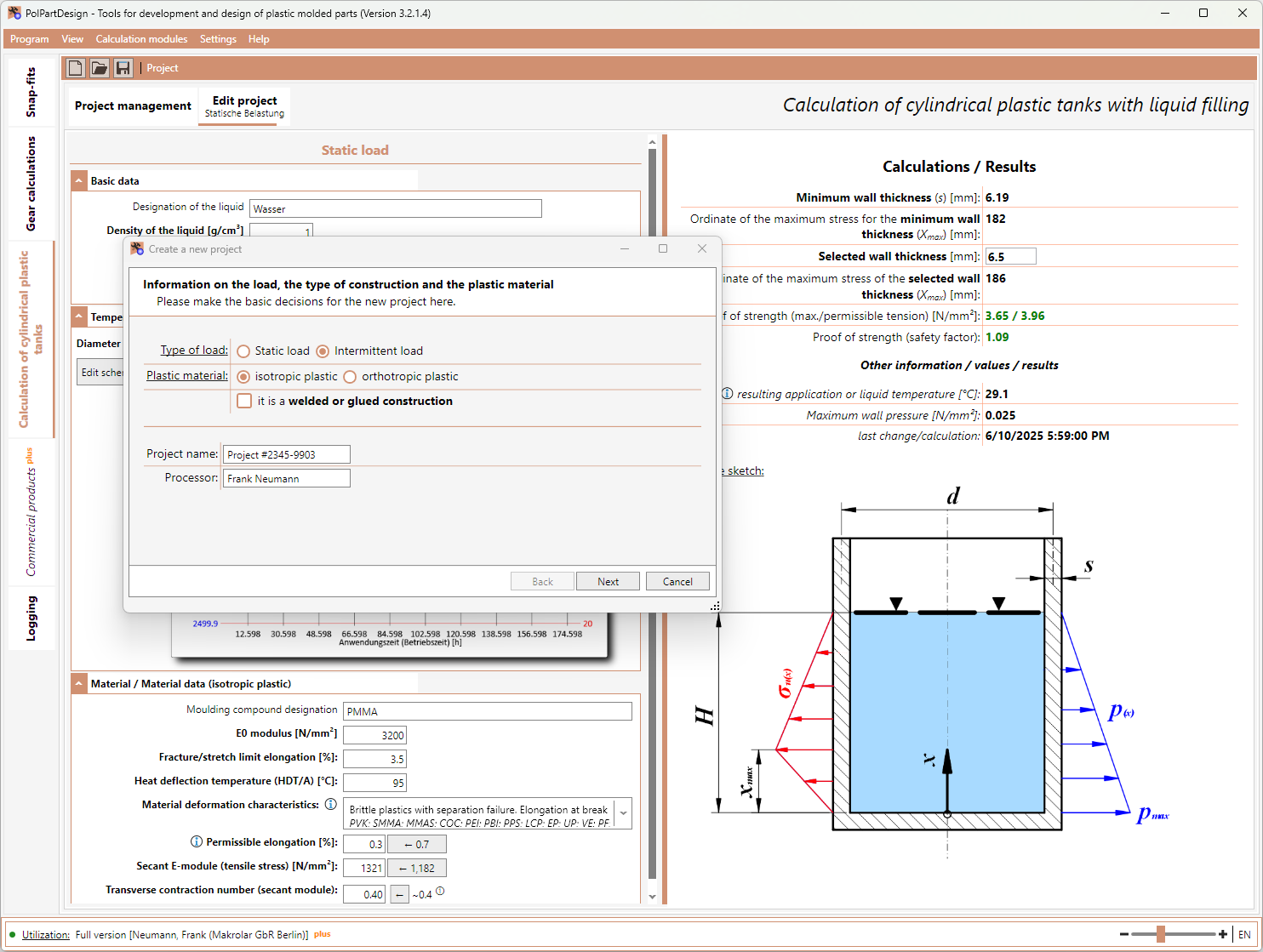
3 / 3 · Creating a new project
The software module "Commercial products" is optional and contains a database with the most important commercial product data of several plastics manufacturers. The database is also available as standalone software PolPlastics.
Moulding compounds of the following manufacturers are included
Included commercial products
The most important material data of the following moulding compounds are included:
| Commercial name | Manufacturer | Polymer family |
|---|
In the trial version, the modules only accept certain inputs; the full version can be used without limitations.
| Trial version | Full version | Full version + commercial products DB | |
|---|---|---|---|
| free of charge | yes | no | no |
| registration required | no | yes | yes |
| Gearnumber of pinions | max. 4 | no limitations | no limitations |
| Gearnumber of teeth | only 50…70 | no limitations | no limitations |
| Gearhelix angle | only 11° | no limitations | no limitations |
| Gearown application factors | no | yes | yes |
| Gearspeeds | only 500…1400 rpm | no limitations | no limitations |
| Gearnominal gear power | not editable | no limitations | no limitations |
| Snap jointmodulus of elasticity | only 900…1400 N/mm² | no limitations | no limitations |
| Snap jointsnap height | only 1.0…1.8 mm | no limitations | no limitations |
| Snap jointcross-sections | only circle and semicircle | all | all |
| Tankdiameter | only 1900…2300 mm | no limitations | no limitations |
| Tankmax. filling height | only 2400…2800 mm | no limitations | no limitations |
| Tankdensity of the liquid | only 1.0…1.2 g/cm³ | no limitations | no limitations |
| usable commercial products (approx. 18,593) | approx. 5% | approx. 5% | all |
For system requirements see "Try it now" in the Snap joints tab.