PolCycleTime
Cooling time, cycle time and conditioning time calculation as well as price and demand calculations
Cooling and cycle time · costing · conditioning
Costs caused by uneconomical and uncertain trial and error under production conditions can largely be avoided. PolCycleTime pays for itself with just one or two projects a year.
The module provides a calculated estimation of the cooling and cycle time for standard injection moulding of non-porous thermoplastics and thermoplastic elastomers.
Typical applications
Main features and functions
- Approx. 159 polymers and approx. 38 additives; their combinations cover (at least) the entire range of moulding compounds listed in CAMPUS®
- Use of your own material data for polymers and additives
- 26 different part and runner geometries
- Approx. 539 injection moulding machines with relevant data to support cycle time determination
- Melt residence time and melt density calculation integrated or usable independently of a project
- Clear entry of inputs; dependencies are shown and located immediately
- Results are updated immediately with every change
- Graphical display of the cooling time curve per geometry
- Data management as project files (save, load, edit, print …), automatic updates
- Usable without an internet connection
- optional: approx. 18,593 commercial products from 32 manufacturers
Definitions
- Cooling time
- Time from the start of mould filling until demoulding, i.e. the physically effective total cooling time of the moulding compound in the mould.
- Cycle time
- Cooling time plus demoulding time and the dry cycle time (dead time) of the machine.
Calculation basis
The cooling time calculation is based on analytical solutions of transient heat transfer, considerably extended and modified for the specific conditions. Compared with published analytical models, the following stand out:
- Sufficiently accurate calculation of the relevant material properties (specific volume, specific heat capacity, thermal conductivity, heat of fusion) for any combination of polymers and additives – including the compounds listed in CAMPUS® and the "BIOPOLYMER Database" as well as natural fibres and slip additives (e.g. PTFE, PE-UHMW, MoS2, graphite)
- Internal determination of the demoulding temperatures based on part and runner cross-sections, stiffness, quality requirements, mould temperature control and demoulding conditions
- Consideration of all essential part and runner geometries including multidimensional temperature equalisation and cooling with very little equalisation (e.g. additional cooling outside the mould)
- Removal of the shear heat from injection as a cooling time component
- Heat of fusion of semi-crystalline polymers as a separate cooling time component, taking undercooling effects into account
The reliability of the cycle time determination is at least equivalent to FEM software – with considerably less effort. Since varying the influencing factors immediately shows the differences by cause, the program offers many options for cycle time optimisation. It can be applied analogously to special injection moulding variants; to minimise cycle times, systematic optimisation under real production conditions is usually recommended.
Try it now
Register in the customer portal to use the software as a trial version, or find out about prices and licenses.
System requirements
- Runs on Windows 10 and later
- Administrator rights for installation and updates
- Usable without internet – a connection is only needed for activation as full version and update notifications
User manual PDF · 1.9 MB
Currently 26 part and runner geometries are supported.
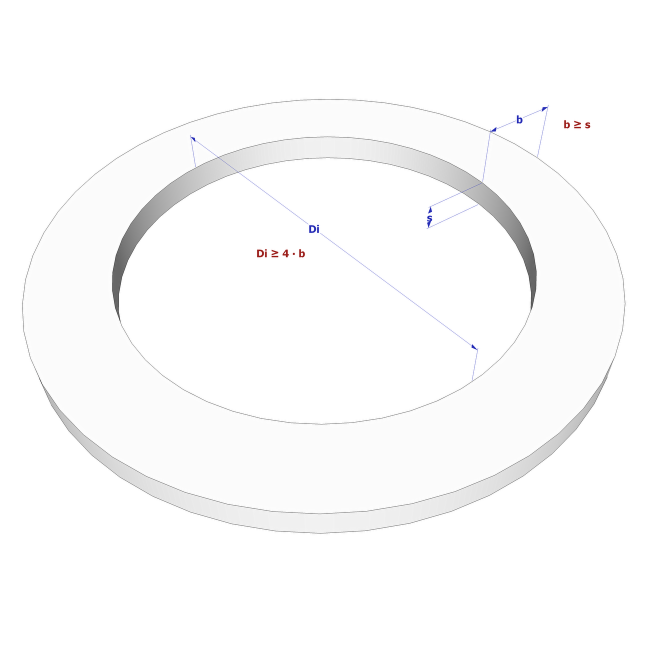
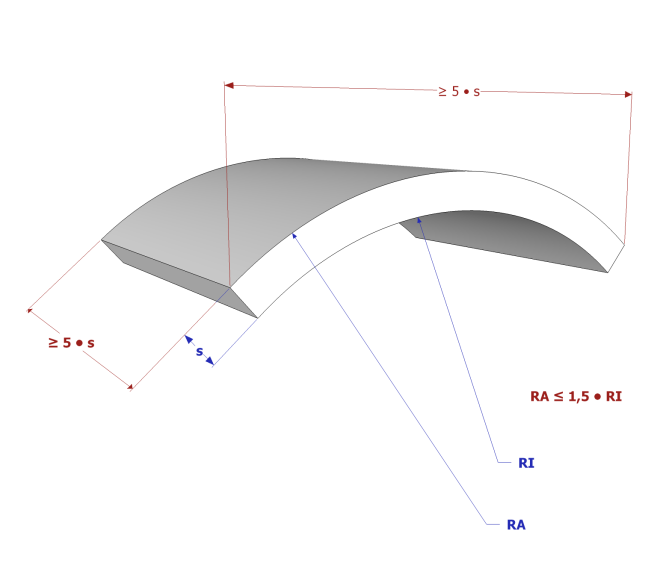
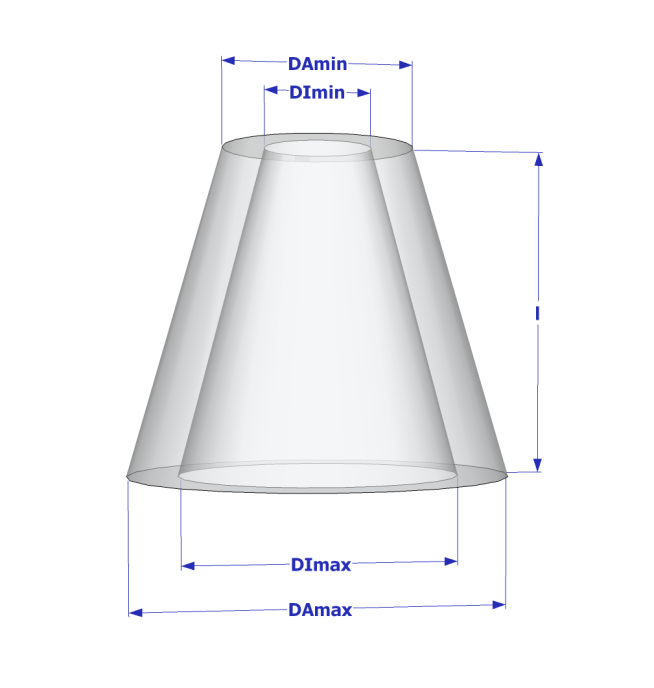
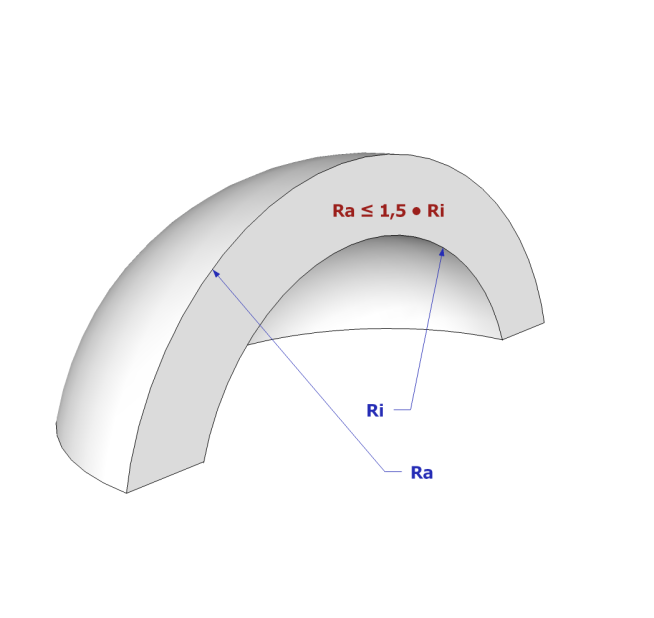
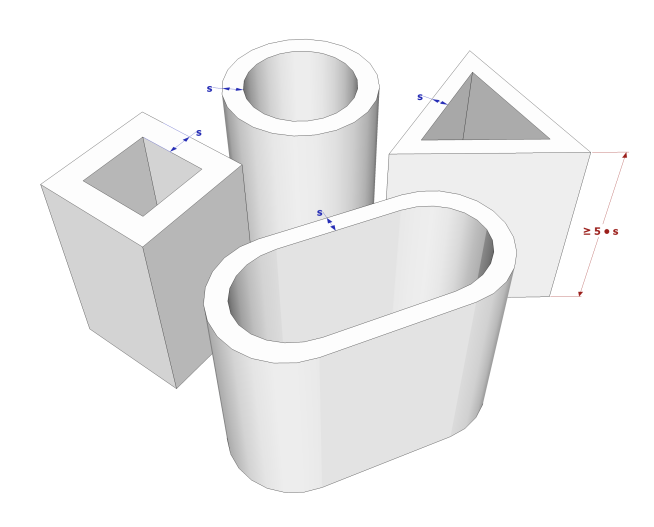
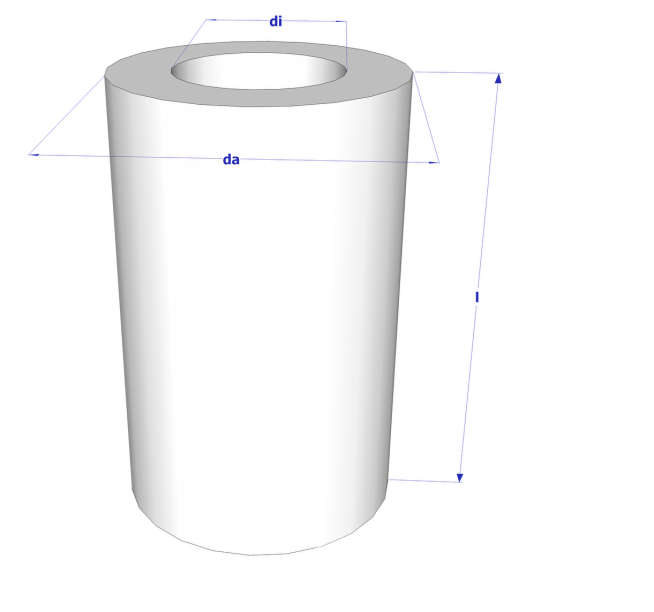
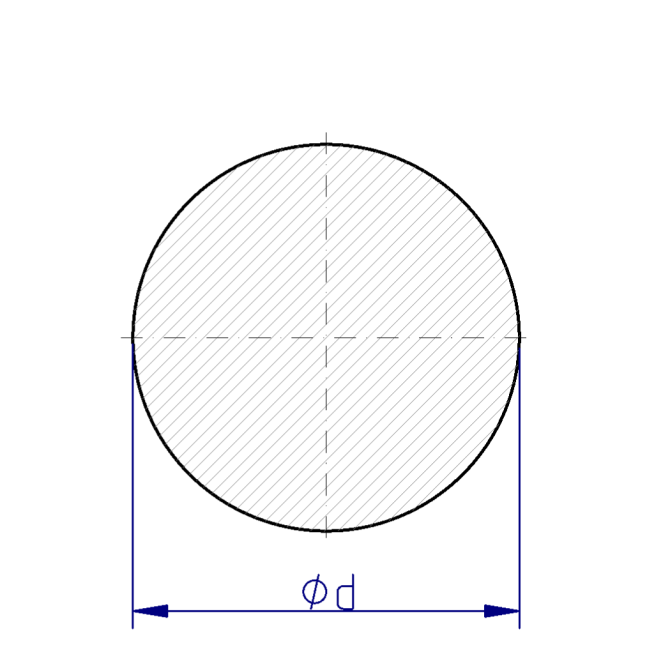
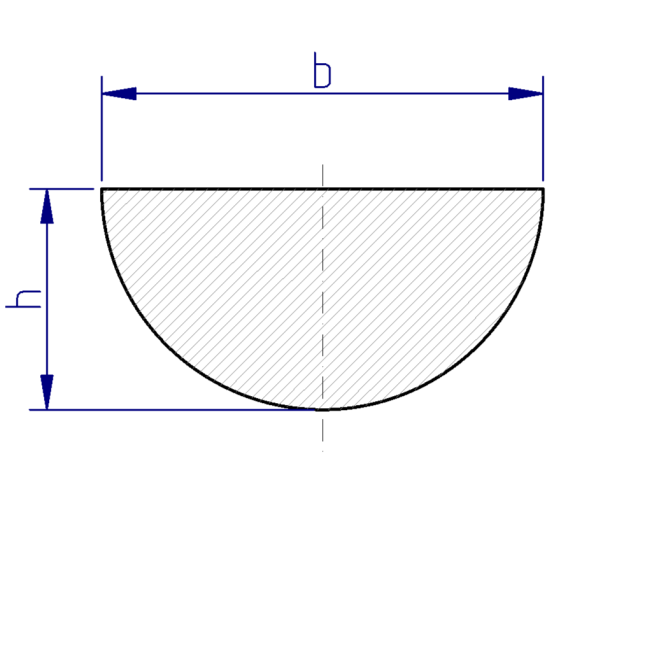
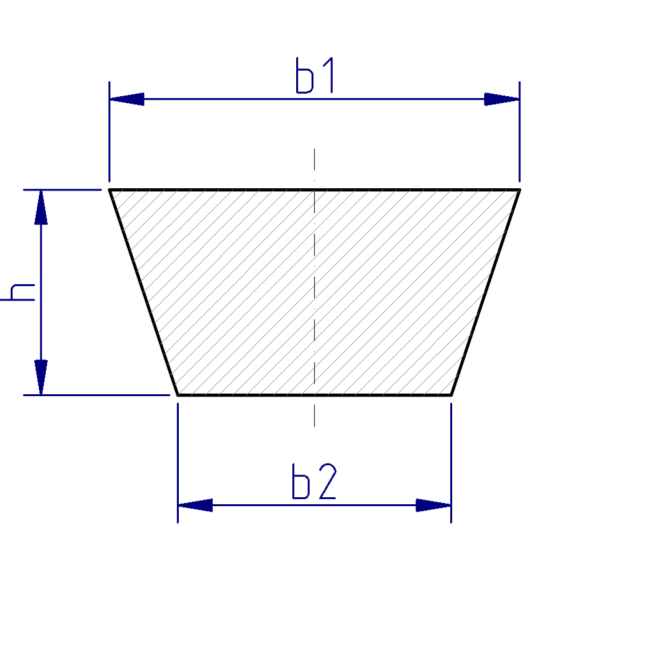
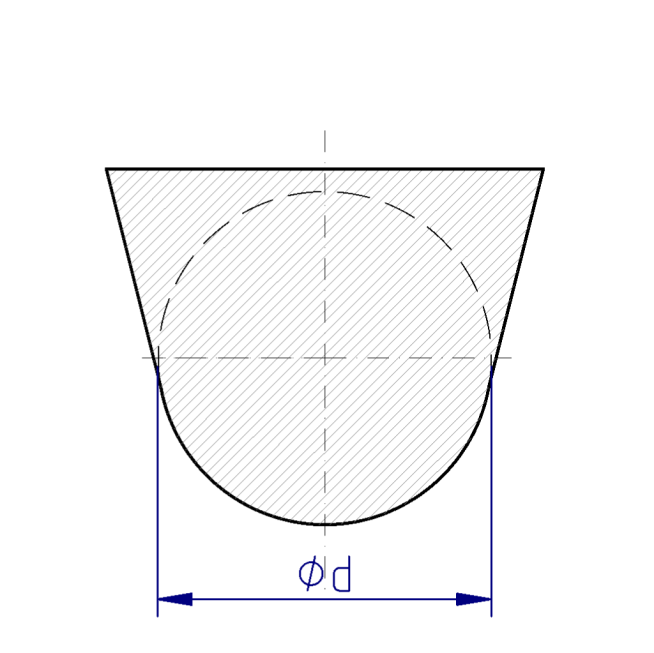
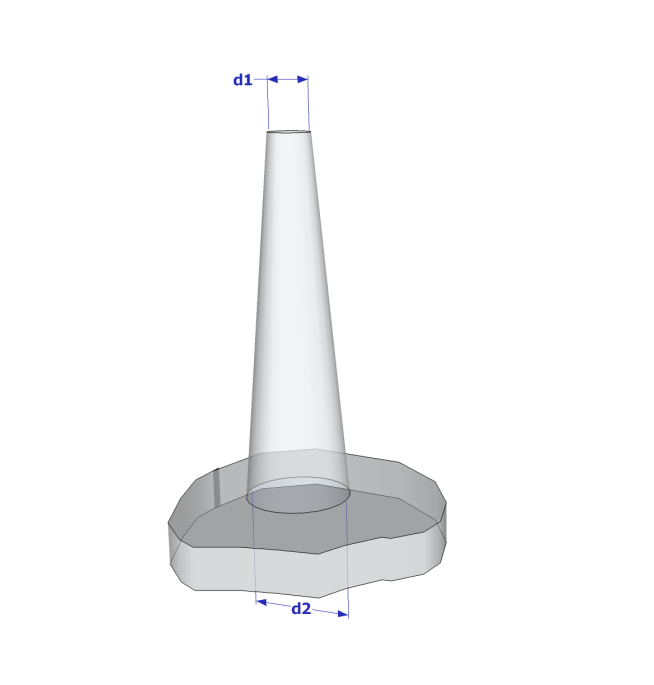
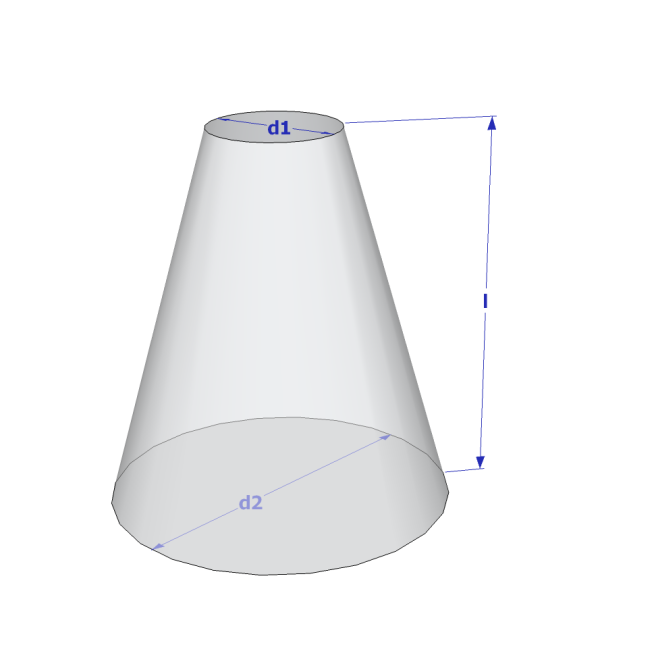
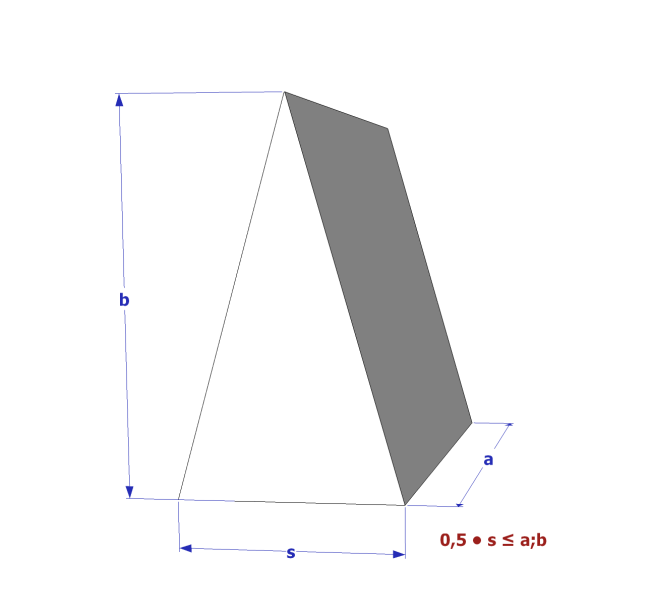
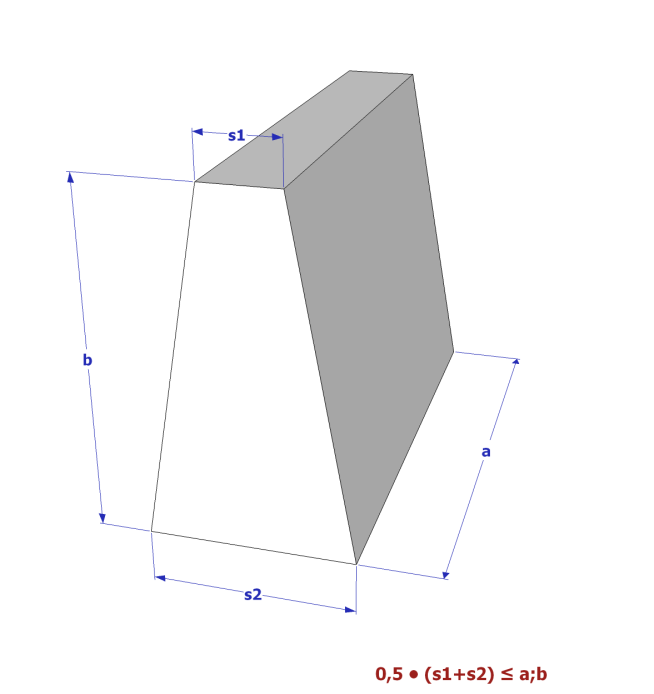
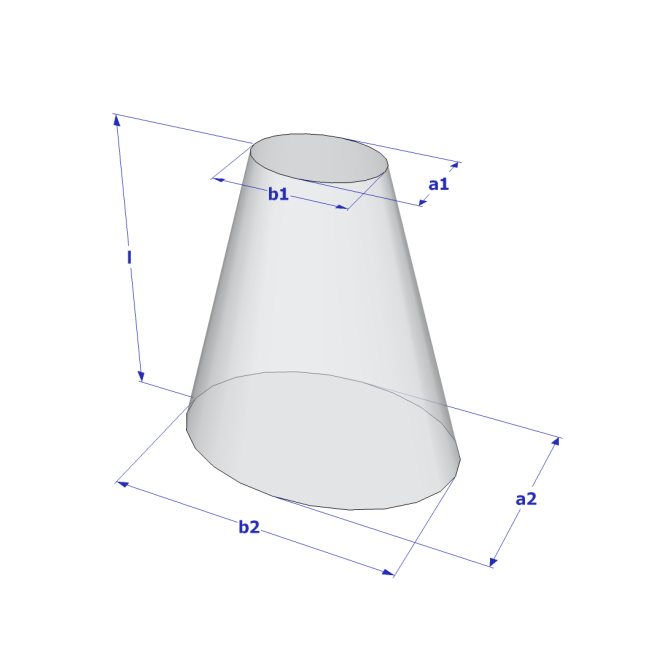
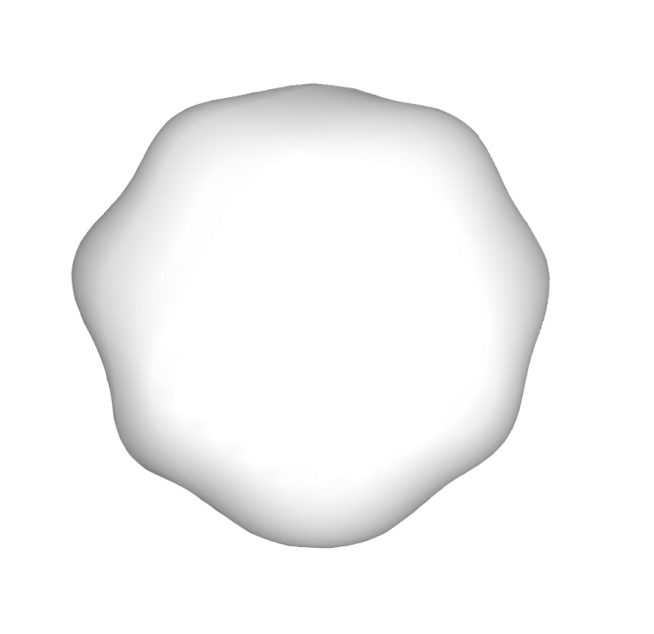
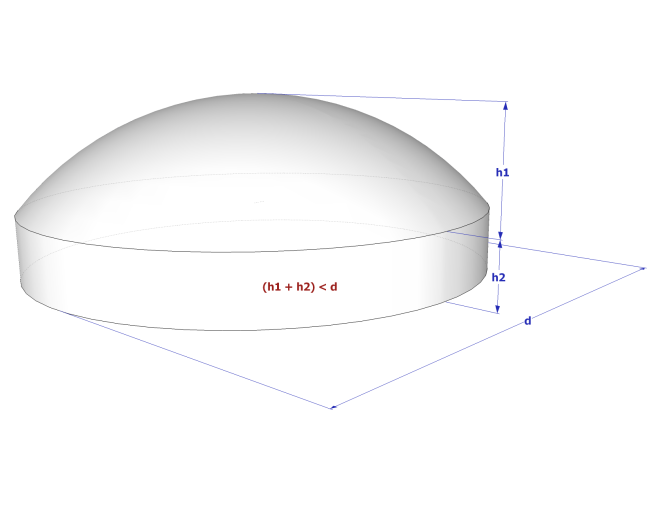
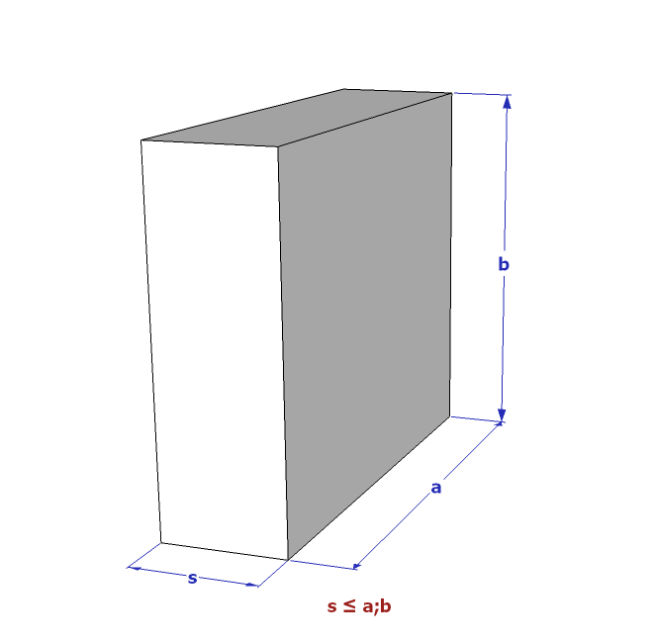
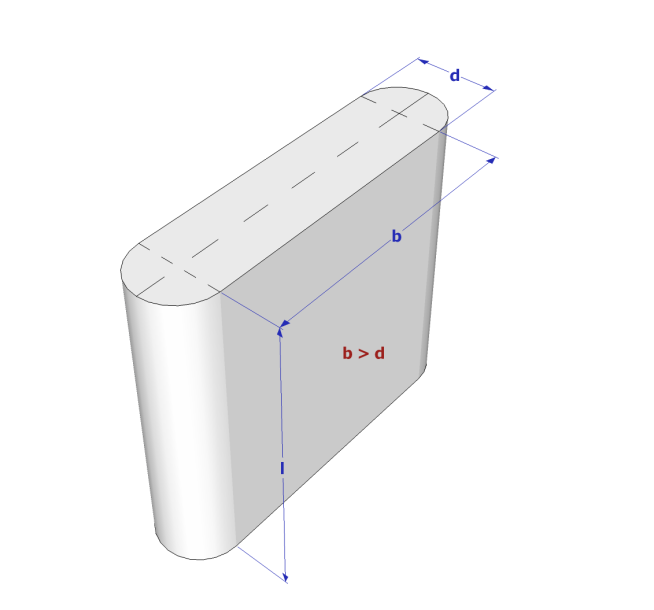
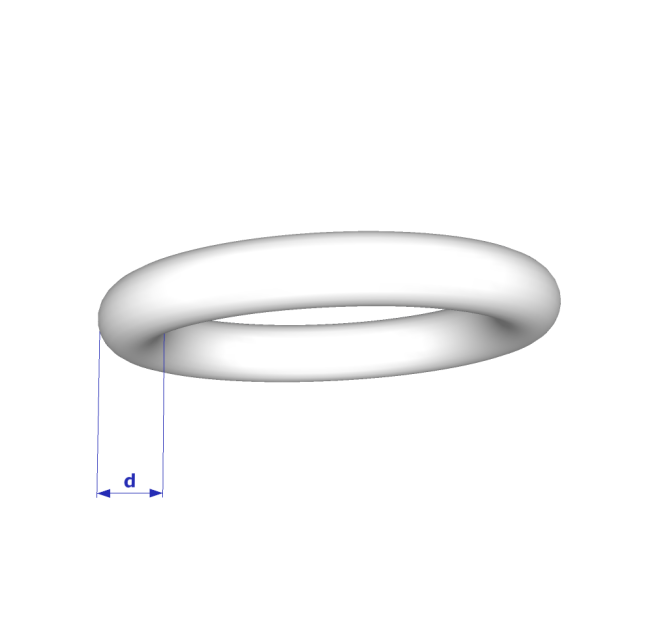
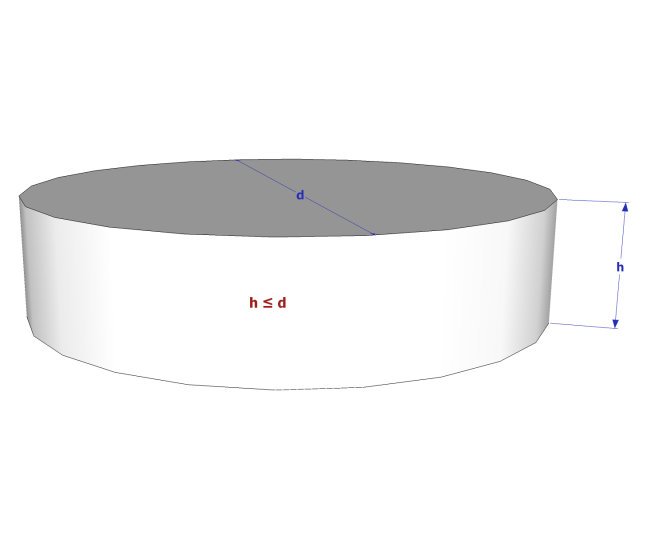
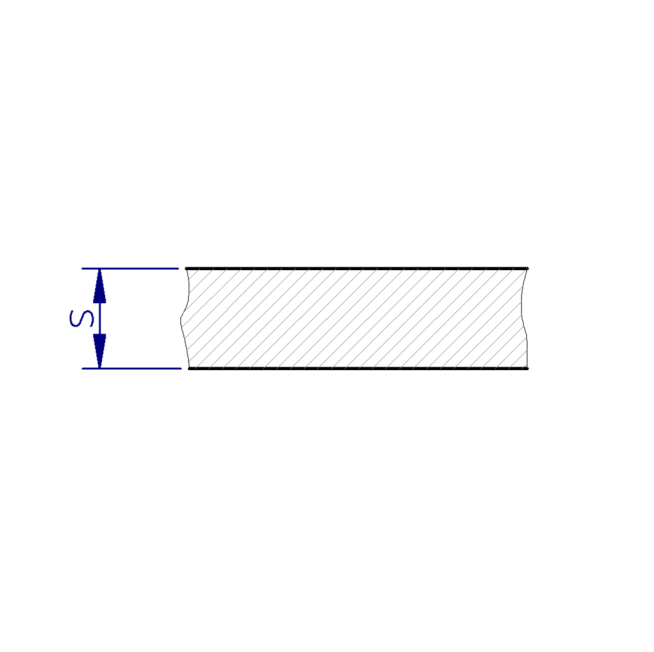
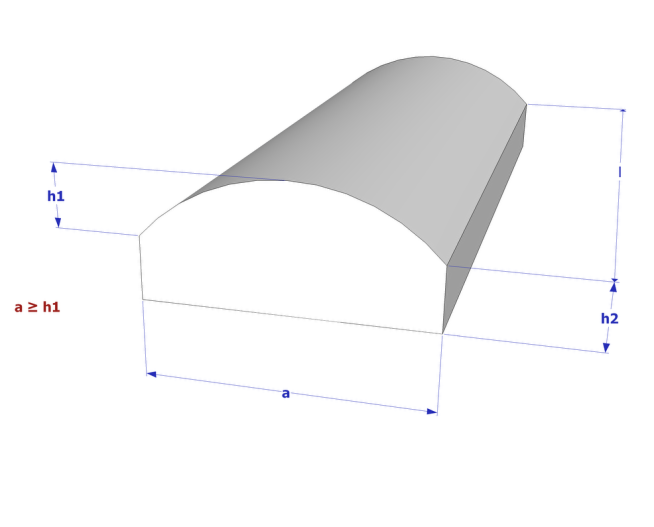
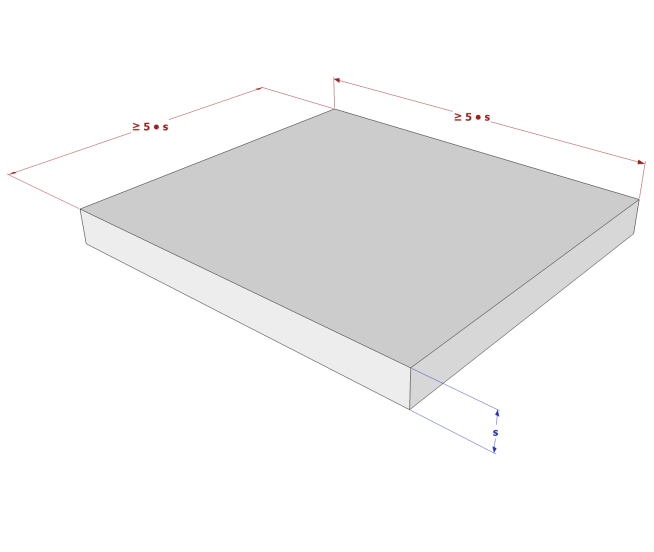
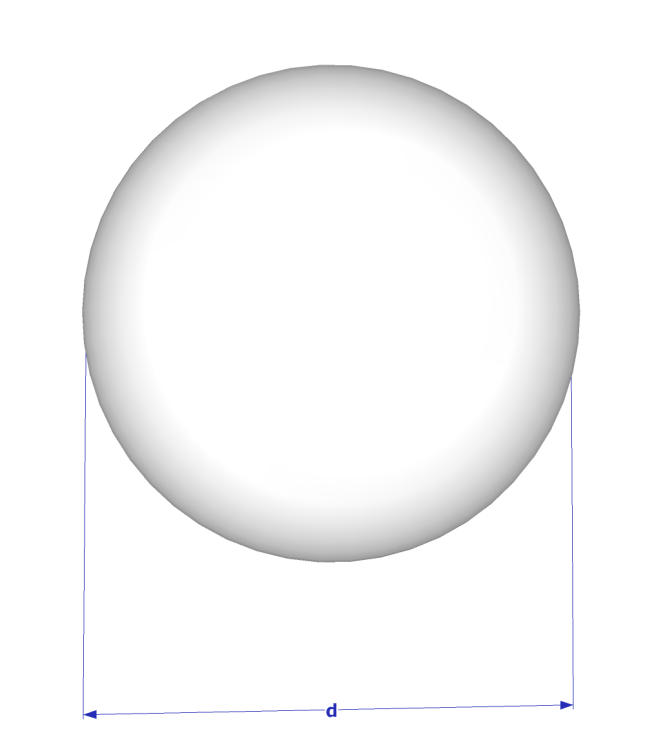
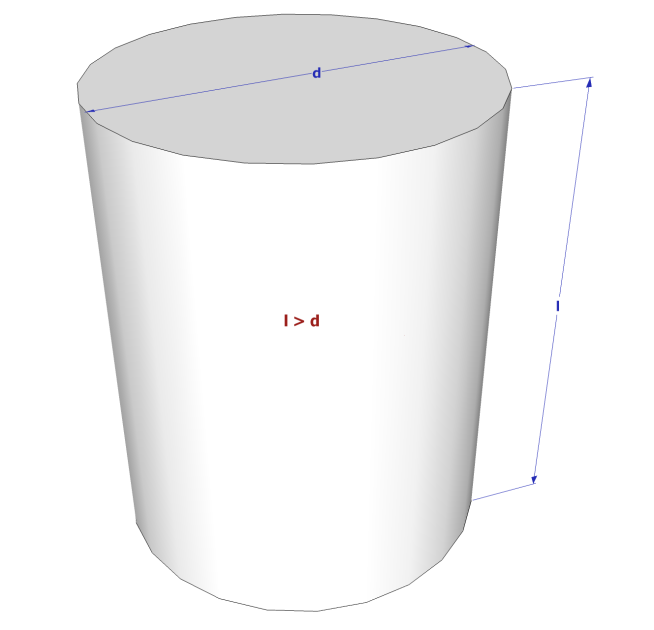
By combining polymer and additive, (at least) the entire range of moulding compounds listed in CAMPUS® can be used. You can also use your own material data.
| Abbreviation | Description |
|---|---|
| (ABS+PA6) | Blend from ABS and PA6 |
| (ABS+PC) | Blend of ABS and PC (mainly ABS) |
| (ABS+PLA) | Blend from ABS and PLA |
| (AEM-X+TPC-ET) | Blend from vulcanized acrylic rubber and TPC-ET |
| (ASA+PA6) | Blend from ASA and PA6 (predominantly ASA) |
| (ASA+PC) | Blend from ASA and PC (predominantly ASA) |
| (ASA+PMMA) | Blend of ASA and PMMA |
| (PA12/MACMI+PA12) (ISO 1874) | Blend of PA12/MACMI and PA12 including impact modification |
| (PA6-3-T+PA612) | Blend from PA6-3-T and PA612 |
| (PA6+PP) | Blend from PA6 and PP (chemically coupled) |
| (PA66+PA6-3-T) | Blend from PA66 and PA6-3-T |
| (PA66+PA6) | Blend from PA66 and PA6 |
| (PA66+PA6)-HI | Impact modified blend from PA66 and PA6 |
| (PA66+PA6/6T) | Blend from PA6 and PA6/6T |
| (PA66+PPE) | Blend from PA66 and PPE |
| (PAMACM12+PA12) (ISO 1874) | Blend from PAMACM12 and PA12 |
| (PBT+ASA) | Blend from PBT and ASA |
| (PBT+PC)-HI | Blend from PBT and PC (elastomer-modified) |
| (PBT+PET) | Blend from PBT and PET |
| (PBT+SAN)-HI | Blend from PC and ABS (mainly PC) |
| (PC+ABS) | Blend from PC and ASA (mainly PC) |
| (PC+PBT) | Blend from PC and PBT |
| (PC+PLA) | Blend from PC and PLA |
| (PC+SAN)-HI | Blend from PC and rubber-modified SAN |
| (PHB+PHV) | boidegr: Polyhydroxibutyrate. Also as copolyester with small amounts of hydroxivalerate |
| (PLA+PBAT) | biodegr: Blend of PLA and PBAT |
| (PLA+PCL) | biodegr: Blend of PLA and PCL |
| (PLA+PE-HD) | Blend from PLA and PE-HD |
| (PLA+PHB) | boidegr: Blend of PLA and PHB |
| (PLA+PSAC) | biodegr: Blend of PLA and thermoplastic starch |
| (PMMA+PLA) | Blend from PMMA and PLA |
| (PPE+SB) | Blend from polyphenylene ether and SB |
| (PSAC+PBAT) | biodegr: Blend of thermoplastic starch and PBAT |
| (PSAC+X) | biodegr: Plasticizer-free thermoplastic starch with low additives (X) |
| (PSAC+X)-P | biodegr: Plasticized thermoplastic starch with low additives (X), e.g. Mater-Bi |
| (SB+PE) | Blend from SB and polyethylene |
| (TPC-ET+PBT) | Blend from TPC-ET, PBT and impact resistant components |
| (TPU+ABS) | Blend from TPU and ABS |
| ABS | Acrylonitrile butadiene styrene copol. |
| ASA | Acrylonitrile styrene acrylic ester copol. |
| CA | Cellulose acetate |
| CAB | Cellulose acetobutyrate |
| COC HDT/B: 130-140°C | Cycloolefin copol. from ethylene and norbornene |
| COC HDT/B: 150-170°C | Cycloolefin copol. from ethylene and norbornene |
| COC HDT/B: 70-80°C | Cycloolefin copol. from ethylene and norbornene |
| CP | Cellulose propionate |
| ECTFE | Ethylene-chlorotrifluoroethylene - Copol. |
| EIM | Ionomer copol. from ethylene methacrylic acid |
| ETFE | Ethylene tetrafluoroethylene - Copol. |
| EVAC | Ethylene-vinyl acetate - copol. |
| FEP | Perfluoroethylene/propylene - Copol. |
| LCP-EST | Aromat. Copolyester (e.g. Vectra A) |
| LCP-ESTA | Aromat. Copolyesteramide (e.g. Vectra B) |
| LCP-HT Schmelztemperatur: 315 bis 335°C | High-melting LCP grades |
| LCP-HT Schmelztemperatur: 350 bis 360°C | High-melting LCP grades |
| MABS (MMABS) | Methyl methacrylate-acrylonitrile-butadiene-styrene copol. |
| MBS | Methacrylate-butadiene-styrene copol. |
| PA1010 | Polydecamethylene sebacinamide |
| PA11 | Poly-11-aminoundecanamide |
| PA12 | Polylaurin lactam |
| PA12-HI | Impact modified PA12 |
| PA12-P | PA12 with plasticizer |
| PA12/MACMI (ISO 1874) | Partially aromatic copolyamide e.g. Grilamid TR55 |
| PA410 | Polytetramethylene sebacinamide |
| PA46 | Polytetramethylene adipamide |
| PA46-HI | Impact modified PA46 |
| PA6 | Polycaprolactam |
| PA6-3-T | Polytrimethylhexamethylene terephthalamide (e.g. Trogamid T) |
| PA6-HI | Dry impact modified PA6 |
| PA6-P | PA6 with plasticizer additive |
| PA6/66 | Copolyamide from PA6 and PA66 (mainly PA6) |
| PA6/6T | Copolyamide of PA6 and PA6T |
| PA610 | Polyhexamethylene sebacinamide |
| PA610-HI | Impact modified PA610 |
| PA612 | Polyhexamethylene dodecanamide |
| PA612-HI | Impact modified PA612 |
| PA66 | Polyhexamethylene adipamide |
| PA66-HI | Impact modified PA66 |
| PA66/6 | Copolyamide from PA66 and PA6 (predominantly PA66) |
| PA66/6-HI | Impact modified copolyamide PA66/6 |
| PA6I | Polyhexamethylene isophthalamide |
| PA6I/6T | Co-polyamide from PA6I and PA6T e.g. Grivori G |
| PA6T/66 und PA66/6T | Copolyamide from PA6T and PA66 |
| PA6T/6I | Copolyamide from PA6T and PA6I |
| PAI | Polyamide imide (e.g. Torlon) |
| PAIND/INDT (ISO 1874) | Partially aromatic copolyamide e.g. Trogamide C |
| PAMACM12 (ISO 1874) | Partially aromatic copolyamide e.g. Grilamid TR90 |
| PAMACM12-HI (ISO 1874) | Impact modified PAMACM12 |
| PAMXD6 | Poly-m-xylylene adipinamide (e.g. Ixef) |
| PB | Polybutene-1 |
| PBAT | biodegr: Copolyester of butanediol, adipic acid and terephthalic acid |
| PBS | biodegr: Polybutylene succinate (polybutylene succinate) |
| PBSA | biodegr: Copolyester of butanediol, succinic acid and adipic acid |
| PBT | Polybutylene terephthalate |
| PBT-HI | Impact-resistant, elastomer-modified PBT |
| PC | Polycarbonate from Bisphenol A (BPA) |
| PC-HI | Impact modified PC |
| PC-HT (PEC) VST/B: 155-190°C | Copolycarbonate made from the bisphenols BPA and TMC (e.g. Apec) |
| PC-HT (PEC) VST/B: über 190°C | Copolycarbonate made from the bisphenols BPA and TMC (e.g. Apec) |
| PCL | biodegr: Polycaprolactone |
| PCT | Polycyclohexylendimethylenterephthalat |
| PCTFE | Polychlorotrifluoroethylene |
| PE-HD Dichte: 0,94g/cm³ | High density polyethylene |
| PE-HD Dichte: 0,95g/cm³ | High density polyethylene |
| PE-HD Dichte: 0,96g/cm³ | High density polyethylene |
| PE-LD | Low density polyethylene |
| PE-MD | Medium density polyethylene |
| PEA | biodegr: Polyester amide from hexanediamine, butanediol and adipic acid (e.g. BAK) |
| PEEK | Polyetheretherketone |
| PEEKK | Polyetheretherketoneketone |
| PEI | Polyetherimide (e.g. Ultem) |
| PEKEKK | Polyetherketone ketone ketone |
| PESU | Polyethersulfone |
| PET | Polyethylene terephthalate |
| PETam. | Amorphous polyethylene terephthalate |
| PFA | Perfluorooxyalkane polymer |
| PIB | Polyisobutylene |
| PK | Aliphatic polyketone (e.g. Carilon) |
| PLA | biodegr: Polylactide |
| PLLA | biodegr: Polylactide from L-lactic acid |
| PMMA | Polymethyl methacrylate |
| PMMA-HI | PMMA impact modified with acrylic elastomer |
| PMMI | Polymethylmethacrylimide (e.g. Pleximid) |
| PMP | Poly-4-methylpentene-1 |
| POM | Polyformaldehyde,Polyoxymethylene (homo- and copol.) |
| POM-HI | Impact-resistant, elastomer-modified POM or addition of PE-UHMW |
| PP | Isotactic polypropylene (homo- and copolymer) |
| PP-HI | High impact PP |
| PPE-HT HDT/B: mind. 190°C | Impact modified PPE high heat deflection temperature |
| PPS | Polyphenylene sulfide |
| PPS-HI | Impact modified PPS |
| PPSU | Polyphenylene sulfone |
| PS | Polystyrene |
| PS-SY | Syndiotactic polystyrene |
| PSU | Polysulfone |
| PTT | Polytrimethylenterephthalat |
| PTT-HI | Impact modified Polytrimethyleneterephthalate |
| PVC-HI | Impact resistant polyvinyl chloride |
| PVC-P | Polyvinyl chloride with plasticizer |
| PVC-U | Polyvinyl chloride without plasticizer |
| PVDF | Polyvinylidene fluoride |
| SAN | Styrene-acrylonitrile copol. |
| SB | Styrene-butadiene copol. |
| SB-T | Transparent styrene-butadiene copol. |
| TPA-ET-PA12 Shore D: bis 35 | Polyamide TPE as polyether block amide from PA12 |
| TPA-ET-PA12 Shore D: über 35-55 | Polyamide TPE as polyether block amide from PA12 |
| TPA-ET-PA12 Shore D: über 55-75 | Polyamide TPE as polyether block amide from PA12 |
| TPA-ET-PA6 Shore D: 40 bis 60 | Polyamide TPE as polyether block amide from PA6 |
| TPC-ET Shore D: 25-40 | Copolyester TPE made from butylene terephthalate and butylene glycol ether |
| TPC-ET Shore D: über 40-55 | Copolyester TPE made from butylene terephthalate and butylene glycol ether |
| TPC-ET Shore D: über 55-75 | Copolyester TPE made from butylene terephthalate and butylene glycol ether |
| TPO-(EPDM+PP) | Olefin TPE as a blend of uncrosslinked EPDM and PP |
| TPO-(EVAC+PVDC) | Olefin TPE as blend of EVAC and PCDC (e.g. Alcryn) |
| TPS-SBS | Styrene TPE as styrene/butadiene/styrene block copol. |
| TPS-SEBS | Styrene TPE as styrene/ethylene butylene/styrene block copol. |
| TPU Shore A/D: bis 90/bis 40 | Urethane TPE (e.g. Desmopan, Elastollan) |
| TPU Shore A/D: über 90/über 40 | Urethane TPE (e.g. Desmopan, Elastollan) |
| TPU Shore D: über 50-75 | Urethane TPE (e.g. Desmopan, Elastollan) |
| TPV-(EPDM-X+PP) | Vulcanized TPE as a blend of crosslinked EPDM and PP |
By combining polymer and additive, (at least) the entire range of moulding compounds listed in CAMPUS® can be used. You can also use your own material data.
| Abbreviation | Description |
|---|---|
| CD | Carbon powder/pigment carbon black |
| CD-EL | Conductivity soot |
| CF | Carbon Fiber |
| CGD | Graphite |
| DD | Aluminum trihydrate (flame retardant) |
| ED | Kaolin |
| Fe3O4 | Magnetite |
| GB | Micro glass spheres (compact) |
| GF | Fiberglass |
| GG | Glass fiber regrind |
| KD | Chalk |
| LF | Cellulose fiber |
| LPD | Lithopone (barium sulfate + zinc sulfide) |
| LSC | Cellulose flakes/chips |
| MD (Al) | Aluminum powder and aluminum grinding |
| MD (Fe) | Iron powder |
| MD (Pb) | Lead powder |
| MD(Cu) | Copper powder |
| MgCO3 | Magnesite |
| MgO | Magnesium oxide |
| MoS2 | Molybdenum disulfide |
| MX | Mineral (other) |
| NF | Natural fiber (flax, hemp, jute, sisal, cotton, etc.) |
| NX | Unspecified organic natural products |
| PD | Mica |
| PE-UHMW | Ultra-high molecular weight PE (slip additive) |
| PTFE | Polytetrafluoroethylene |
| QD | Quartz and rock flour |
| RF | Aramid fiber |
| SID | Highly dispersed silica (e.g. Aerosil) |
| SSD | Barite (barium sulfate) |
| TD | Talc |
| TID | Titanium white (anatase, rutile) |
| WD | Wood flour, lignin |
| WOF | Wollastonite (asbestos substitute) |
| ZnCO3 | Zinc spar (smithsonite) |
| ZOD | Zinc oxide |
| ZRD | Zirconium silicate |
Since approx. 80% of the costs in a product's life cycle are determined in the design and development phase, it makes sense to manage costs alongside design and development.
Approximate calculation for injection-moulded and pressed plastic parts
Calculations
- Estimation of the mould wear life via influencing factors such as manufacturing process, mould design, mechanical load, wear resistance and surfaces of the contour parts, tolerance requirements and abrasion of the polymer melt
- Machine hourly rates for injection moulding machines and presses
- Comparative piece costs from material, production, mould, scrap and quality assurance costs
- Optimum number of cavities from wear-related, production-related and economic cavity numbers
- Mould requirements, machine occupancy times and economic (profit-optimal) batch size
Variants and operation
- Up to 10 variants per project, displayed side by side and easy to compare
- Duplicate variants at any time and distinguish them by colour
- Apply calculated orientation values or use your own experience
- Compact result overview and graphical piece cost distribution per variant
- Print all inputs, decisions and results per variant; manage projects as files
Further technical details in the book "Development and Design of Plastic Parts".
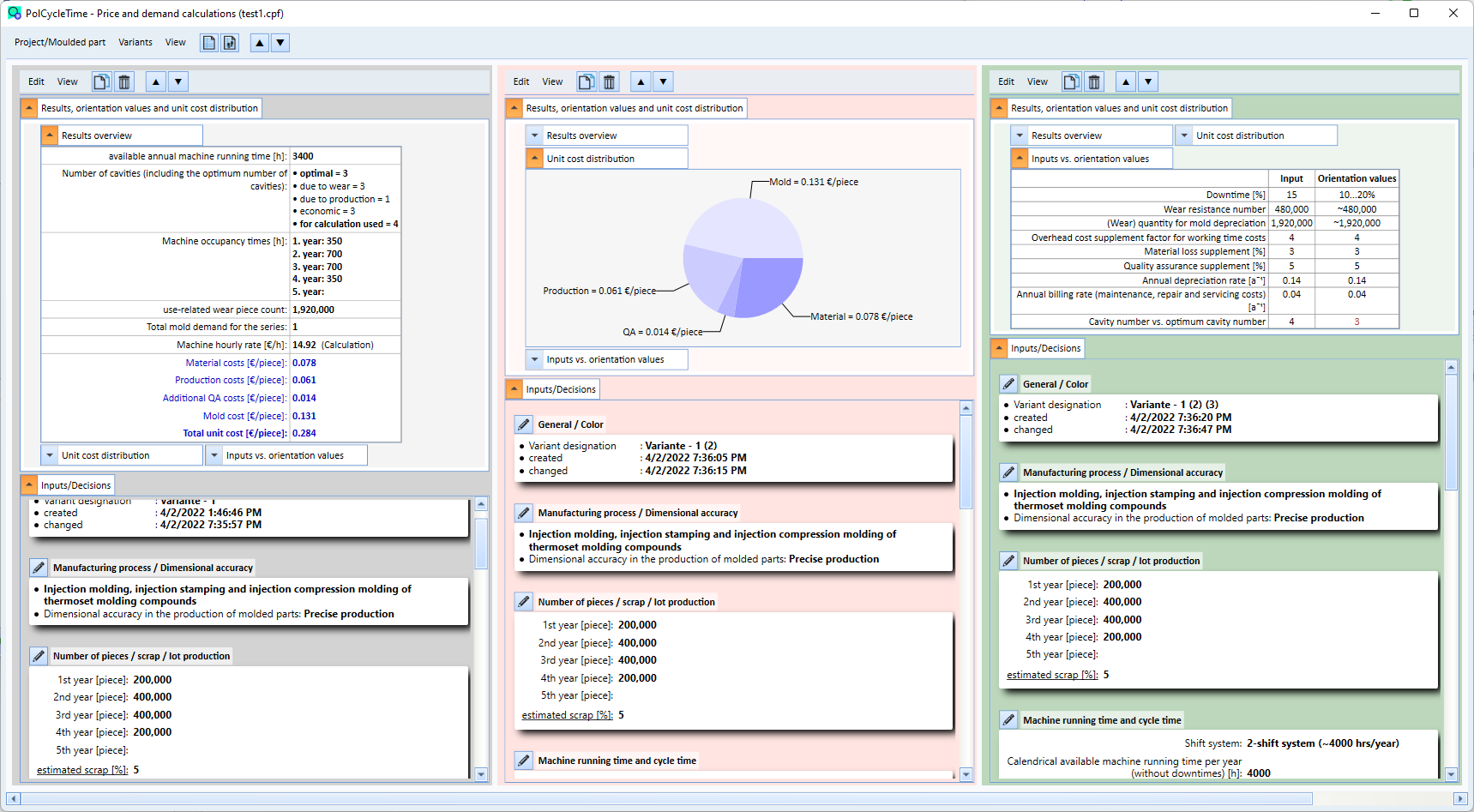
1 / 9 · Project window with three variants
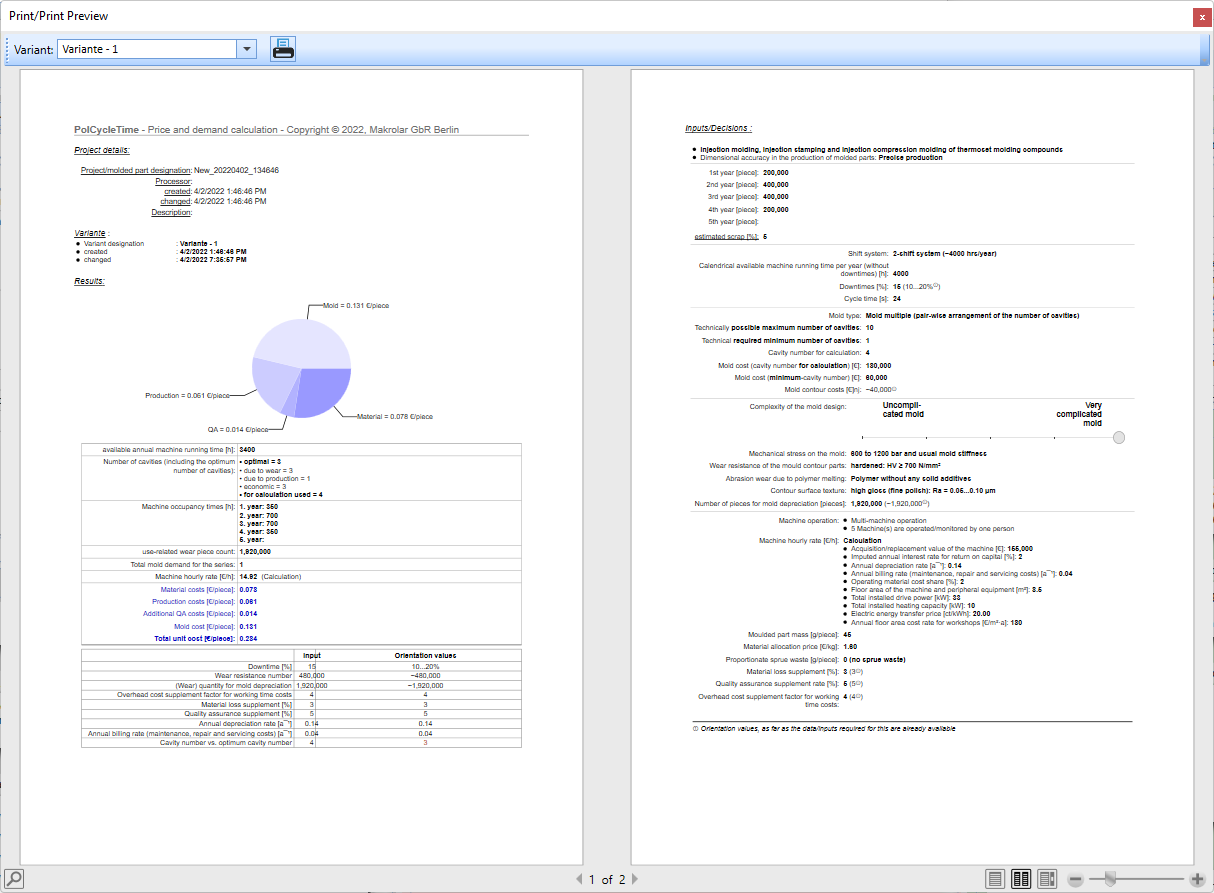
2 / 9 · Print preview of a variant
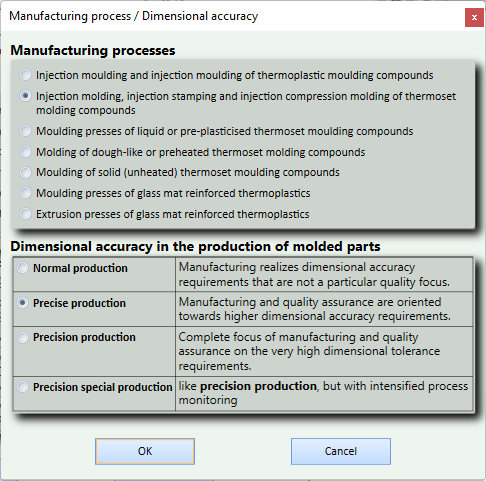
3 / 9 · Manufacturing process, dimensional accuracy
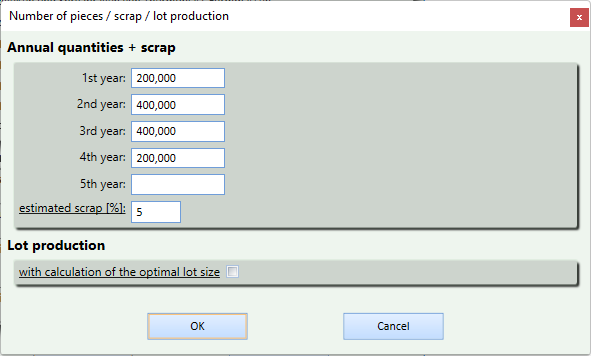
4 / 9 · Quantities, scrap, batch production
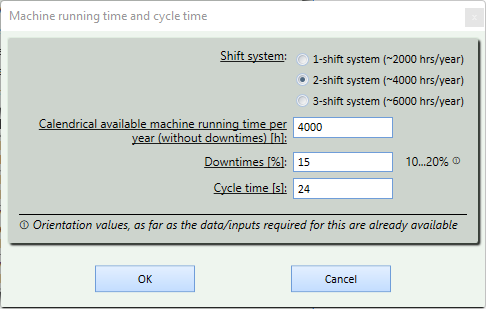
5 / 9 · Machine running time, cycle time
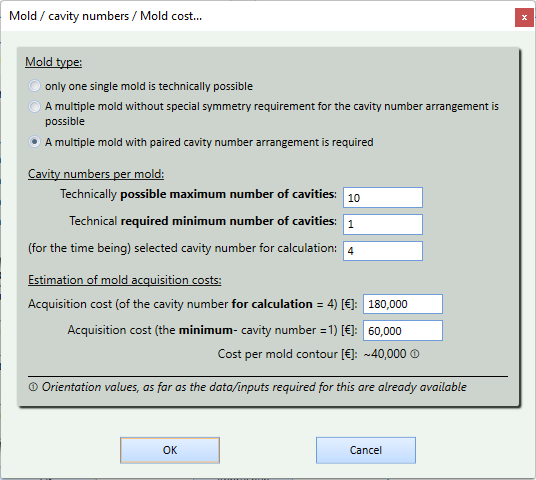
6 / 9 · Mould, cavity numbers, mould costs
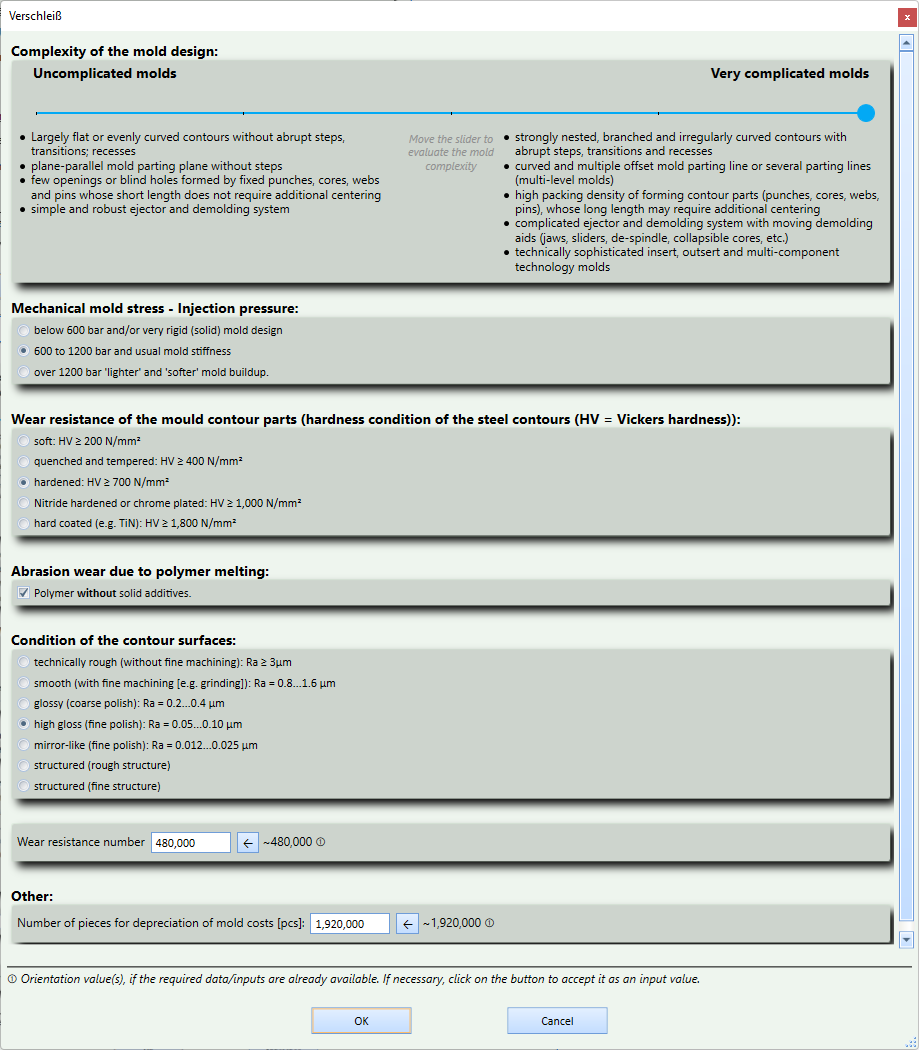
7 / 9 · Wear
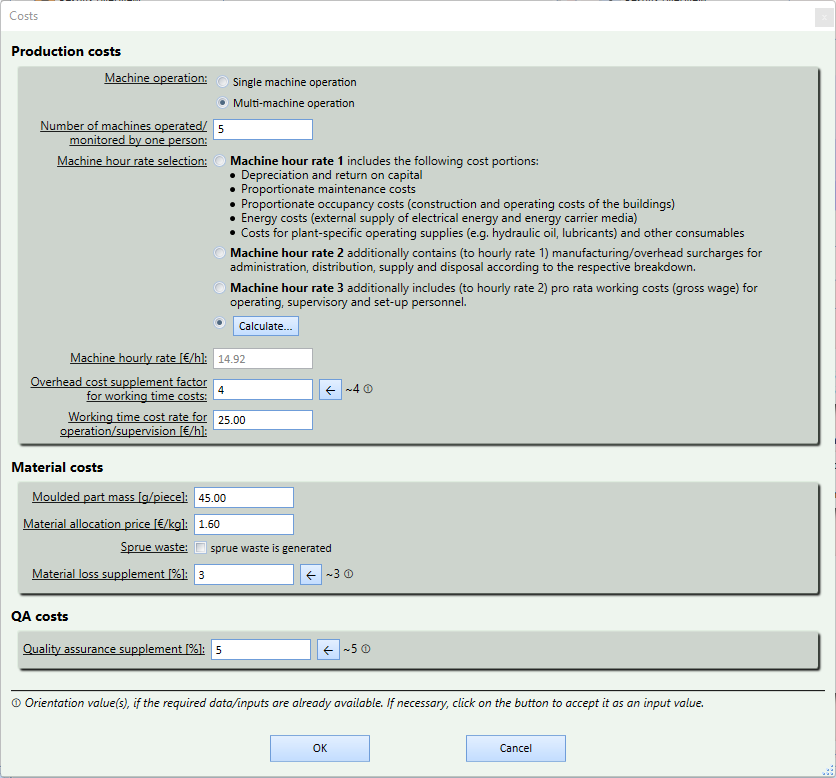
8 / 9 · Costs
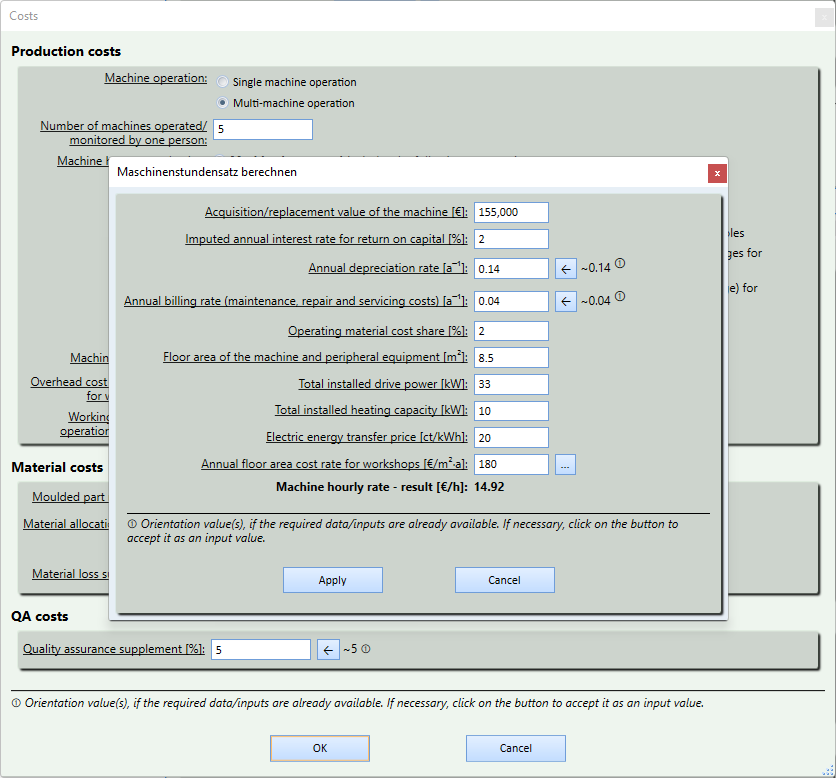
9 / 9 · Machine hourly rate
The water absorption of plastics influences application-relevant properties. With increasing water content:
- dielectric losses increase
- stiffness and hardness decrease
- toughness increases (impact strength, elongation at break)
- dimensional changes due to swelling or drying increase
The maximum water absorption up to saturation varies greatly: for non-polar plastics (e.g. polyolefins) it is often negligible, for hydrophilic (polar) plastics (e.g. polyamides) it must be taken into account. To introduce a required water concentration, such parts are post-treated by conditioning.
Diffusion in compact solids is much slower than heat conduction; conditioning times increase quadratically with the cross-sectional thickness. To keep them short, conditioning takes place in temperature-controlled hot water baths (40–90 °C) or saturated steam autoclaves (above 100 °C) – matched to the thermal stability of the plastic. Depending on additives and structure, short conditioning processes can cause discoloration, deposits, warpage or cracks; warm, humid climate chambers are gentler.
Calculation concept
Transient mass transfer by water vapour diffusion is described with the same mathematical formalism as transient heat conduction: concentration fields are calculated like temperature fields, with the thermal diffusivity replaced by the diffusion coefficient. A saturated water vapour layer is assumed at the part surface. The calculation assumes diffusion-controlled mass transport; capillary transport due to porosity is not considered. Plastics with very high contents of solid additives (e.g. above 50 vol.%) may not meet this condition.
Main functions
- Analysis of individual part geometries and determination of the conditioning time of the decisive geometry
- Material data for unfilled/unreinforced plastics; use and management of your own material data
- Water content from the climate conditions of the application (indoor and outdoor climate)
- 20 part geometries
- Graphical conditioning time curve per geometry for conditioning temperature and initial water content
- Project management as files, print / print preview
Currently 20 part geometries are supported.
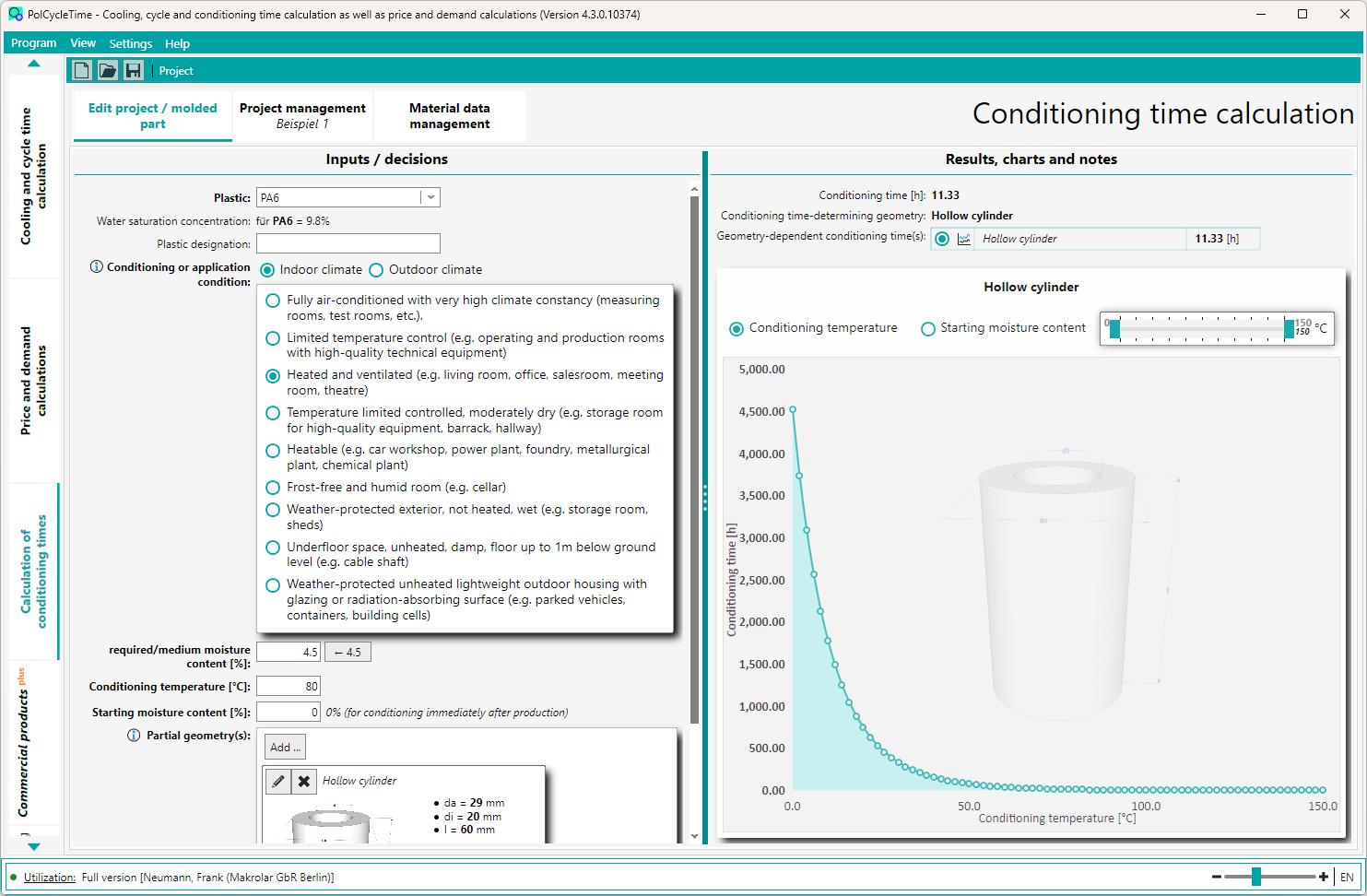
1 / 4 · Main view
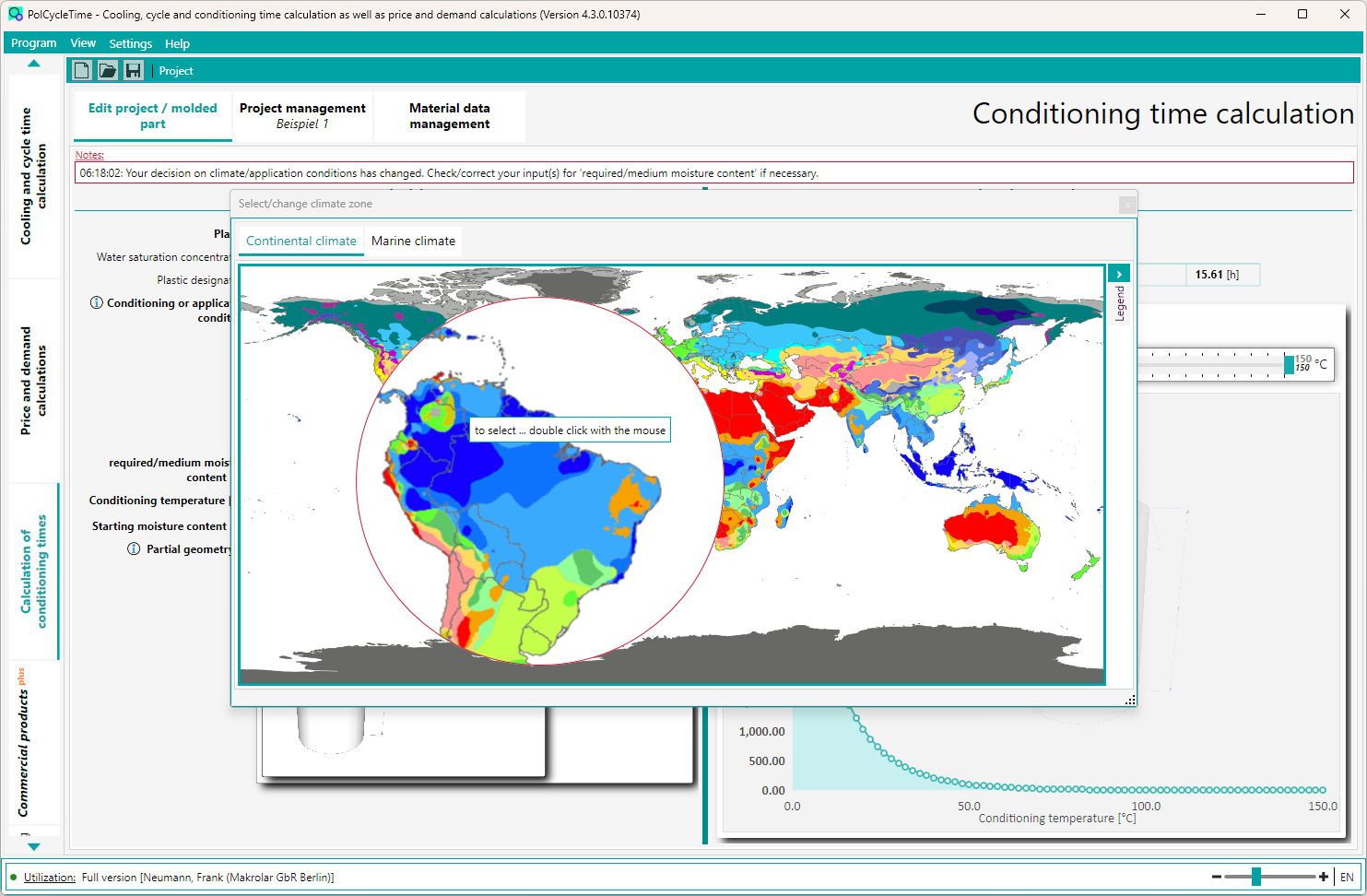
2 / 4 · Outdoor climate
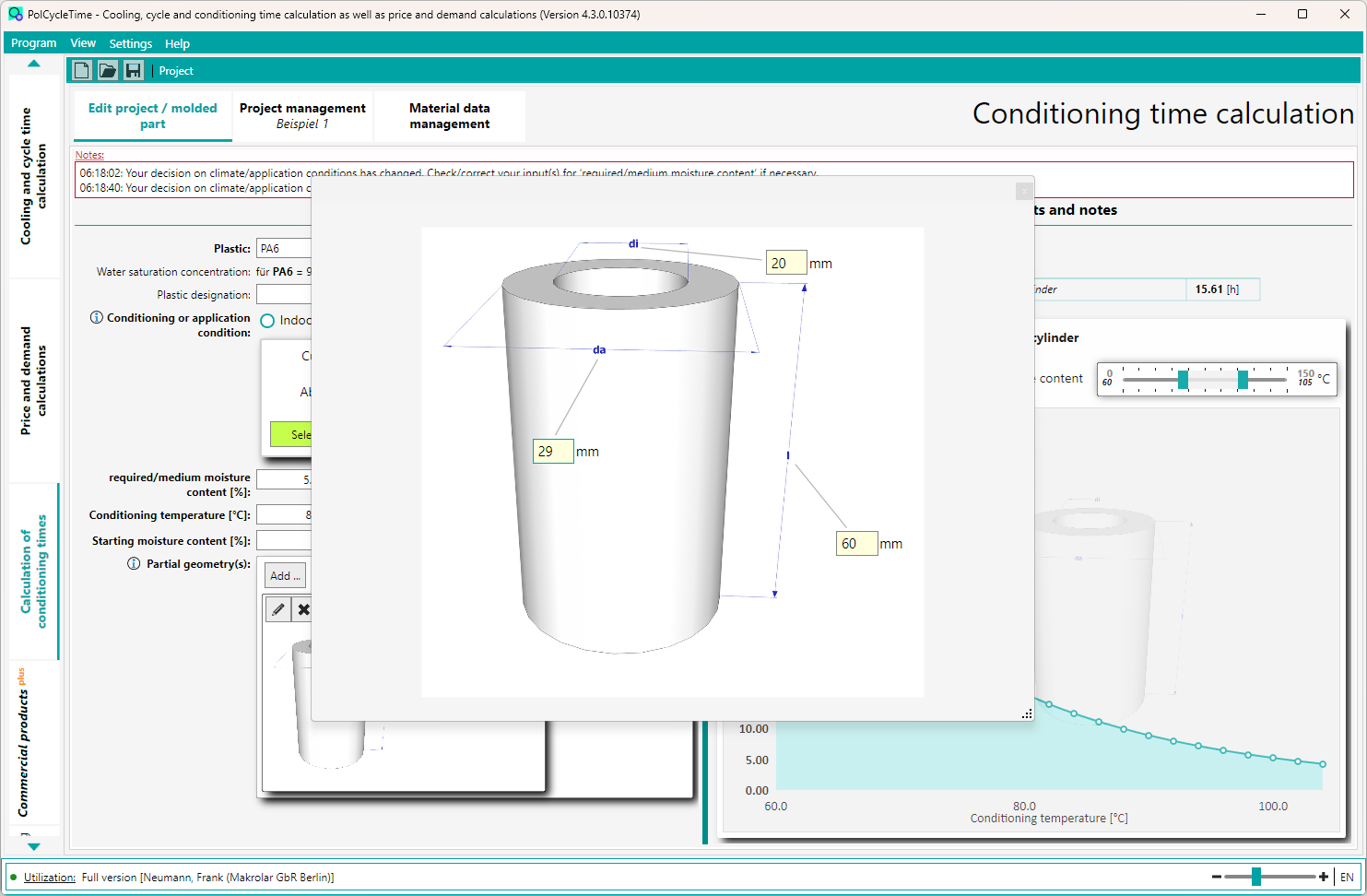
3 / 4 · Editing a geometry
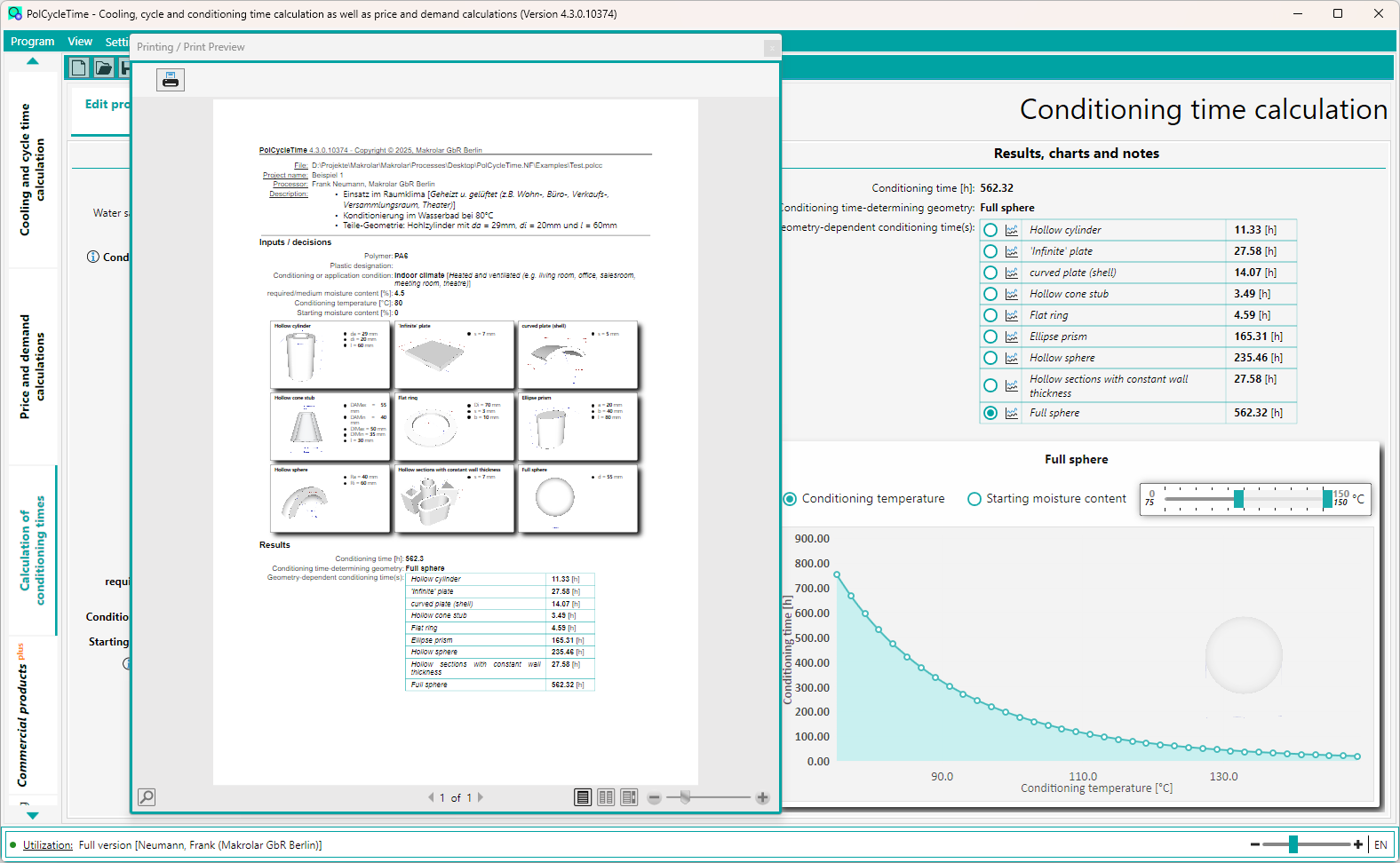
4 / 4 · Print / print preview
The software module "Commercial products" is optional and contains a database with the most important commercial product data of several plastics manufacturers. The database is also available as standalone software PolPlastics.
Moulding compounds of the following manufacturers are included
Included commercial products
The most important material data of the following moulding compounds are included:
| Commercial name | Manufacturer | Polymer family |
|---|
The editions differ mainly in the number of usable polymers, additives, geometries and commercial products. In the price and demand calculation module, the trial version only accepts certain inputs.
| Trial version | Full version | Full version + commercial products DB | |
|---|---|---|---|
| free of charge | yes | no | no |
| registration required | no | yes | yes |
| Cooling/cycle timeusable polymers (approx. 160) | approx. 5% | all | all |
| Cooling/cycle timeusable additives (approx. 40) | approx. 10% | all | all |
| Cooling/cycle timeusable geometries (26) | cylinder, hollow sphere, wedge, runner (trapezoidal) | all | all |
| Costingmanufacturing processes | only injection moulding, injection compression and transfer moulding of thermosets | all | all |
| Costingproduction tolerances | only precision production | all | all |
| Costingcontour surface finish | only technically rough and glossy | all | all |
| Costingcycle time | only 24…48 s | no limitations | no limitations |
| Costingmaterial price | only 1.5…1.8 €/kg | no limitations | no limitations |
| Costingpart mass | only 40…100 g | no limitations | no limitations |
| Conditioningusable geometries (20) | cylinder and hollow sphere | all | all |
| Conditioningmean water content | only 0…2.9% | no limitations | no limitations |
| usable commercial products (approx. 18,593) | approx. 5% | approx. 5% | all |
For system requirements see "Try it now" in the Cooling and cycle time tab.